What Is Animism? A Living Cosmology for Sensitive People
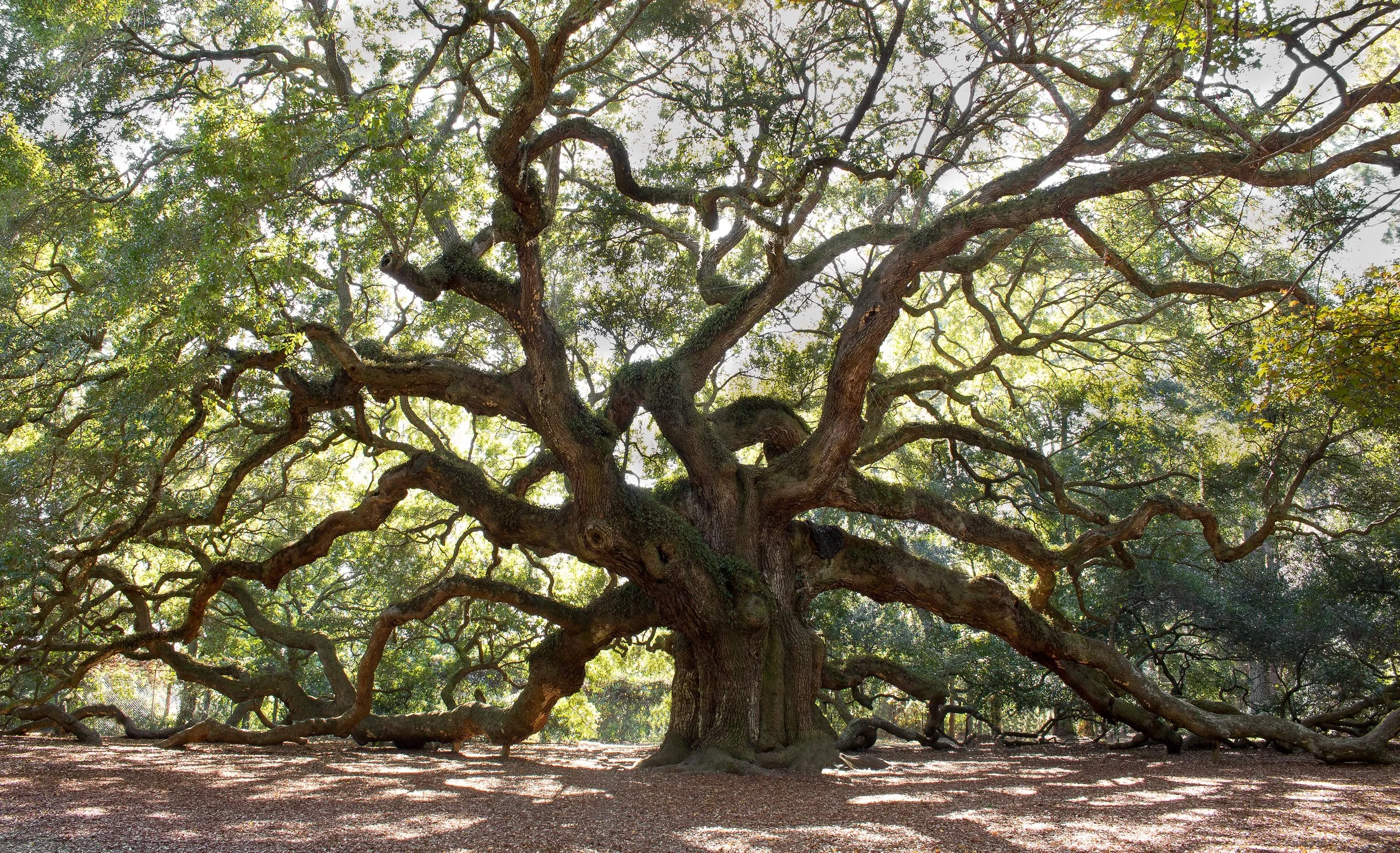
Ancient oak tree...Learn about Animism with Ro Marlen
I was eight years old when I learned to stop seeing what I had always seen. Before that, the world was obvious... the oak in my back yard had a particular presence, watchful and unhurried, older than any story I'd been told; the creek behind our house was not water moving over stones but a conversation, and I understood its murmuring. The ants knew me as kin. I would watch them all day, absorbed in something I didn’t have a name for. I didn't need one. It was simply how reality was. Then I understood, with the special clarity of childhood, that other people did not see it this way. Somewhere in the years that followed, I learned to close what I had always kept open, call it imagination, set it down, and become legible to a world that had forgotten how to read what I was reading. It would be thirty years before the word found me: animism. What is animism? It is the oldest answer to the question of what the world is made of, and it is, I believe, the most honest one. In this post, you'll find not just a definition but a living cosmology: a way of perceiving and belonging to reality that your own ancestors once inhabited, and that you may already be carrying without a name for it.
The Word Has a History and It Isn't Pretty
Before we can reclaim the word animism, we need to know who named it and why.
In 1871, a British anthropologist named Edward Burnett Tylor published a two-volume work called Primitive Culture. In it, he defined animism as the belief that souls or spirits inhabit all things. He positioned it as the most primitive stage of human religious development. For Tylor, animism was what "savages" believed before they evolved toward civilisation, science, and (implicitly) Christianity. The word was coined as part of a framework that placed indigenous peoples on a lower rung of evolutionary development than European men. It was, as one scholar has since stated plainly, a colonialist slur.
Why That History Still Lives in Our Bodies
This matters because it explains why the word still lands for many with a faint smell of condescension (why "animist" can sound like something exotic, or something that belongs to cultures other than one's own). That response was designed by the Overculture* as a way of severing European-descended people from their own relational worldview by making that worldview shameful.
Reclaiming the Word
The good news is that scholars have been doing their own reclamation work.
“Anthropologist Graham Harvey, in his landmark redefinition of the term, describes animists simply as “people who recognize that the world is full of persons, only some of whom are human, and that life is always lived in relationship with others.””
That definition lands differently. Not "primitive" but relational. It is what the wisest strands of every culture have always known, and precisely the land-connectedness that people of European descent practised for thousands of years before empire told them to stop and made them ashamed of what they'd known.
[Graham Harvey, Animism: Respecting the Living World, 2006]
What Animism Actually Is: A Cosmology, Not a Belief System
Animism is a cosmology (not a set of beliefs you adopt, not a spiritual framework you download, not a philosophy you reason your way into, or a practice you add to your morning routine) but a way of perceiving the nature of reality itself. For many of us, it is not something we need to learn. It is something we need to remember.
Everything Is Alive, and That Is Not a Metaphor
A cosmology shaped by animism holds a few things as foundational.
“Everything is alive... not metaphorically, not poetically, but literally.”
The trees hold intelligence. The Land carries memory. The seasons are not a backdrop: they are beings with something to offer. Your ancestors are not people who once existed; they are presences in a living field, still active, still in relationship with those who came after them.
Pantheism it is not. This is simpler and more immediate than that.
“It is the recognition that the world is not a collection of objects waiting to be used (it is a community of persons, most of them not human, engaged in an ongoing conversation).”
You are part of that conversation, whether you know it or not.
The Human Role Is Not to Master but to Tend
When we speak of animist cosmology, we mean this: a foundational orientation to reality in which relationship is primary, aliveness is assumed rather than earned, and the human role is not to master or extract but to tend, to listen, to participate.
“The Land is not a metaphor, your body is not a machine, and the ancestors are not gone. These are not poetic framings... they are perceptions confirmed by direct experience across thousands of years of human life on this earth.”
For people who are sensitive and spiritually attuned (those who have always felt more than the culture around them had language for, who have grieved a world that seemed to be speaking to them in a language no one else acknowledged), animism is not a new idea. It is a homecoming.
My Own Thirty-Year Reclamation
I was not raised with the word animism. I was raised inside the experience of it, and then spent the better part of my life trying to explain away what I had always known.
The child I was did not question whether the oak was alive or whether the creek had something to say. These were not beliefs I held but perceptions I had. The ants knew me as a sibling. The Land had moods I could feel in my body before I stepped outside — this was not unusual to me, it was simply the texture of being alive. What was unusual, I would come to understand, was the culture I had been born into.
The Shutting Down
At eight years old, I understood, with a child's precise and devastating clarity, that I was different. Not gifted or special, but different in the way that makes you learn quickly, to be quiet about certain things. The clairvoyance, the felt sense of presences, the knowing... I did not have language for any of it, but I had enough social intelligence to understand it was not welcome. So I set it down. I learned to live on the surface of a world I had always known to be much deeper than it appeared.
What I did not know then was that this shutting down is not a personal failure. It is a cultural inheritance.
“ Generations of European-descended people were taught (sometimes through violence, always through shame) to sever their felt relationship with the living world and call that severance sophistication.”
My closing down at eight was simply the moment that inheritance landed in my particular body.
What Reclamation Actually Looks Like
The word animism did not find me until about six or seven years ago. When it did, it arrived not as a new idea but as a name for something I had never stopped being.
“Reclamation, for me, has not been a dramatic return. It has been a gradual relearning of trust in what my senses report, in the intelligence of the Land I live on, and in the knowledge that the presences I have always felt are real and relational and worth tending.”
This is what I want for the people who find their way to this work. A remembering that unfolds.
The Question That Matters: What Did We Lose When We Stopped Listening?
Understanding what animism is (and what was lost when European culture abandoned it) requires us to sit with an uncomfortable question. The dominant story of Western civilisation is one of progress: from superstition toward reason, from animism toward science, from the living world toward the measurable one. Tylor's framework did not just describe this story — it enshrined it, and for centuries, European-descended people have lived inside it as though it were simply true.
But there is another way to read history.
“What if what we called progress was also, simultaneously, a severing? What if the rationalisation of the natural world (the reduction of living Land to resource, of seasonal rhythm to inconvenience, of ancestral presence to superstition) cost us something we have not yet fully named?”
The Wound Beneath the Searching
Sensitive, spiritually attuned people feel this cost in our bodies. They feel it as the persistent sense that something is missing, that the world is flatter than it should be, and that they are homesick for a place they have never been.
“They reach (often desperately) toward traditions that seem to hold what their own culture has abandoned.”
Sometimes the reach is toward Buddhism, or indigenous practices from other lineages, or toward any system that promises to restore the felt sense of a world that is alive and in relationship.
That reaching comes from a real hunger, and it deserves to be honoured. But there is a difference between appreciation and appropriation, and it matters here. Cultural exchange is not new (it has moved between peoples for as long as peoples have existed), and what made that exchange generative rather than extractive was that both sides of it were intact: rooted in their own land, their own living traditions, their own cosmological ground.
Appropriation is something different. It happens when one culture has been severed from its own roots and reaches into another culture's living tradition to fill the gap, while the same forces that did the severing continue to actively harm that other culture. The power differential is what changes the nature of the exchange. And for people racialized as white, there is something else worth naming: the "it's always happened" argument is, more often than not, a shortcut past the harder work.
“It is easier to borrow than to excavate, but borrowed roots don’t feed you the same way.”
What you are looking for is not somewhere else. It is in your own ancestral ground, waiting to be recovered.
Animism and the European Ancestral Tradition
People are often surprised to learn that animism is not foreign to European culture. It is European culture (or rather, it was) before the Church, the crown, and the enclosure of common land worked systematically to make it otherwise. The forces that dismantled the animist worldview were not foreign invaders. They were European, and they exported that dismantling across the globe.
The pre-Christian peoples of Europe were animist. The Norse, the Celts, the Slavic traditions, the Germanic tribes, the peoples of the British Isles, and the Mediterranean edges (all lived inside cosmologies in which the Land was alive, the ancestors were present, the seasons were sacred thresholds, and the human community was embedded within a much larger community of beings). The wise women and men of these traditions (the healers, the dreamers, the threshold-holders were the keepers of a relational knowledge refined across thousands of years of life on specific Land.
What the Burning Times Severed
This was not gradually lost but deliberately destroyed.
“The Inquisition, the burning times, the enclosure of common Land, the criminalisation of herbalism and midwifery, the replacement of cyclical time with linear productivity... these were not separate events. They were a coordinated dismantling of the animist worldview and the communities that carried it.”
[Silvia Federici, Caliban and the Witch, 2004; Barbara Ehrenreich and Deirdre English, Witches, Midwives and Nurses, 1973]
What was lost was not primitive. It was sophisticated, embodied, and relational in ways that modern Western culture is only beginning to re-approach through the languages of ecology, neuroscience, and somatic therapy. The Wise Woman tradition did not disappear because something better replaced it. It disappeared because it threatened a system that required disconnection to function.
The Work of Recovery
This is why I root this work specifically in the European animist lineage (not as a limitation but as a precision, and as an ethical commitment). For people racialized as white [Christian Ortiz], the invitation is not to reach toward traditions that belong to other peoples. The traditions that belong to you were not erased. The severance was not your fault, but recovering what was lost is your sacred responsibility.
“Pre-Christian European cultures were animist, relational, earth-based, and sophisticated, and what was suppressed can be recovered.”
This isn't self-help. It is cultural repair.
What Animism Offers the Sensitive, Spiritually-Attuned Person
Most of the people who find their way to this work arrive carrying a particular kind of exhaustion. Not just physical tiredness (though that is often present too) but the deeper fatigue of having spent years feeling more than the culture around them had language for — feeling the grief of the Land without knowing why, sensing presences that no one else acknowledged, knowing things before they could be explained, and being told, in countless direct and indirect ways, that this knowing was too much, not credible, not useful.
What animism offers is not a solution to that exhaustion but a reframe so fundamental it changes the ground you are standing on.
“You were not too sensitive. You were accurately perceiving a world that is genuinely alive, and living inside a culture that had declared that aliveness inadmissible.”
Belonging to a Larger Body
One of the things land-connectedness restores (and this is something I have watched happen in people again and again) is the felt sense of belonging to something larger than the individual self.
“The Overculture’s deepest wound is the wound of isolation: the belief that you are a separate unit, responsible for your own survival, accountable only to yourself. Animism dissolves that story not through argument but through direct experience.”
When your body is in relationship with the Land, with the season, with the more-than-human community around you, the isolation lifts. Not because a problem has been solved but because a lie has been seen through.
The Body as the Place of Return
This is also why the work is somatic before it is cognitive. An animist cosmology cannot be understood from the neck up. It must be felt... in the soles of your feet on actual ground, in the way your nervous system settles when you sit beside moving water, in the recognition that moves through your chest when the season turns, and your body knew it before your mind did.
In an animist worldview, body and spirit are not separate things… your body is your participation in the living world, and tending it is an animist act.
Kombumerri and Wakka Wakka Elder and philosopher Mary Graham (whose thinking on Aboriginal relational philosophy has informed this work) teaches that we are always in relationship: to self, and to environment. That is where return begins, not in a concept or a course but in the recognition, arriving in your body, that you have never actually been separate from the living world around you. You have only been taught to act as though you were.
[Mary Graham, in conversation with Tyson Yunkaporta, The Other Others podcast (exact episode unconfirmed); see also Graham, 'Some Thoughts about the Philosophical Underpinnings of Aboriginal Worldviews', Australian Humanities Review, 2008]
Finding Your Way Back: Where This Work Begins
Reclaiming an animist cosmology does not require leaving your life. It does not require a retreat, ceremony, or teacher (though all of those can help). It begins with something simpler and more radical: the decision to take your perceptions seriously, to treat the felt sense of the Land's aliveness as data rather than imagination, to let the season you are living in have a say in how you move through your days.
This is the foundation of the work inside Rewild Yourself — my foundational course for sensitive, spiritually attuned people who are ready to restore the Ground beneath their healing. It moves through the European ancestral calendar, the body's seasonal rhythms, and the practices of land-connectedness that your own lineage once carried, not as information to absorb, but as remembering to undergo.
If you are not ready for a course, begin with the body. The Come Home to Your Body ritual is a free offering (a simple threshold back into felt relationship with your own animal self). From there, everything else becomes possible.
“You do not need to find animism. In all likelihood, it has been waiting inside you since before you had a word for it. The work is not an acquisition. It is return.”
Reflection Questions
Sit with these (in your journal, in your body, or simply while you walk).
Where in your life have you always sensed something alive that others did not acknowledge? A place, a creature, a season, a presence?
When did you first learn to dismiss or explain away what your senses were telling you, and what did that cost you?
What would change in your daily life if you treated the Land you live on as a being with intelligence, memory, and something to offer you?
Is there a tradition, a practice, or a way of knowing in your own ancestral lineage that you have felt drawn toward without fully understanding why?
What does belonging (real belonging, to place and to the more-than-human world) feel like in your body when you imagine it?
What Is Animism? A Reminder Before You Go
Animism is not a relic or a belief system reserved for cultures that haven't yet discovered science. It is the oldest and most honest cosmology available to us: the understanding that everything is alive, that relationship is the primary reality, and that humans belong to the world rather than above it.
“For sensitive, spiritually attuned people living inside the exhaustion of the Overculture, this is not abstract philosophy — it is medicine.”
It is the restoration of land-connectedness that your nervous system has been asking for, often for years, in the language of grief and longing and the persistent sense that something essential is missing. What is missing is not far away. It is under your feet, in your lineage, in the body you are already living in.
Coming Home
I think of that child watching the ants, certain of her kinship with them, of the oak's watchfulness, certain that the creek had something to say if she stayed still enough to hear it. She was not wrong, and she was not too much — she was simply living inside a cosmology that her culture had forgotten, and that she would spend thirty years finding her way back.
If you recognise something of yourself in that child, you are not alone, and you are not broken. You are, in all likelihood, someone whose perceptions have always been more accurate than the world around you had the capacity to hold. That is exactly the person this work was made for.
Explore the foundational course, Rewild Yourself, or begin gently with the free Attune to the Moon newsletter and let the lunar cycle become your first teacher.
The world is alive. It has always been waiting for you to remember that.
*the Overculture, a term Clarissa Pinkola Estés gave to the systems of dominant culture


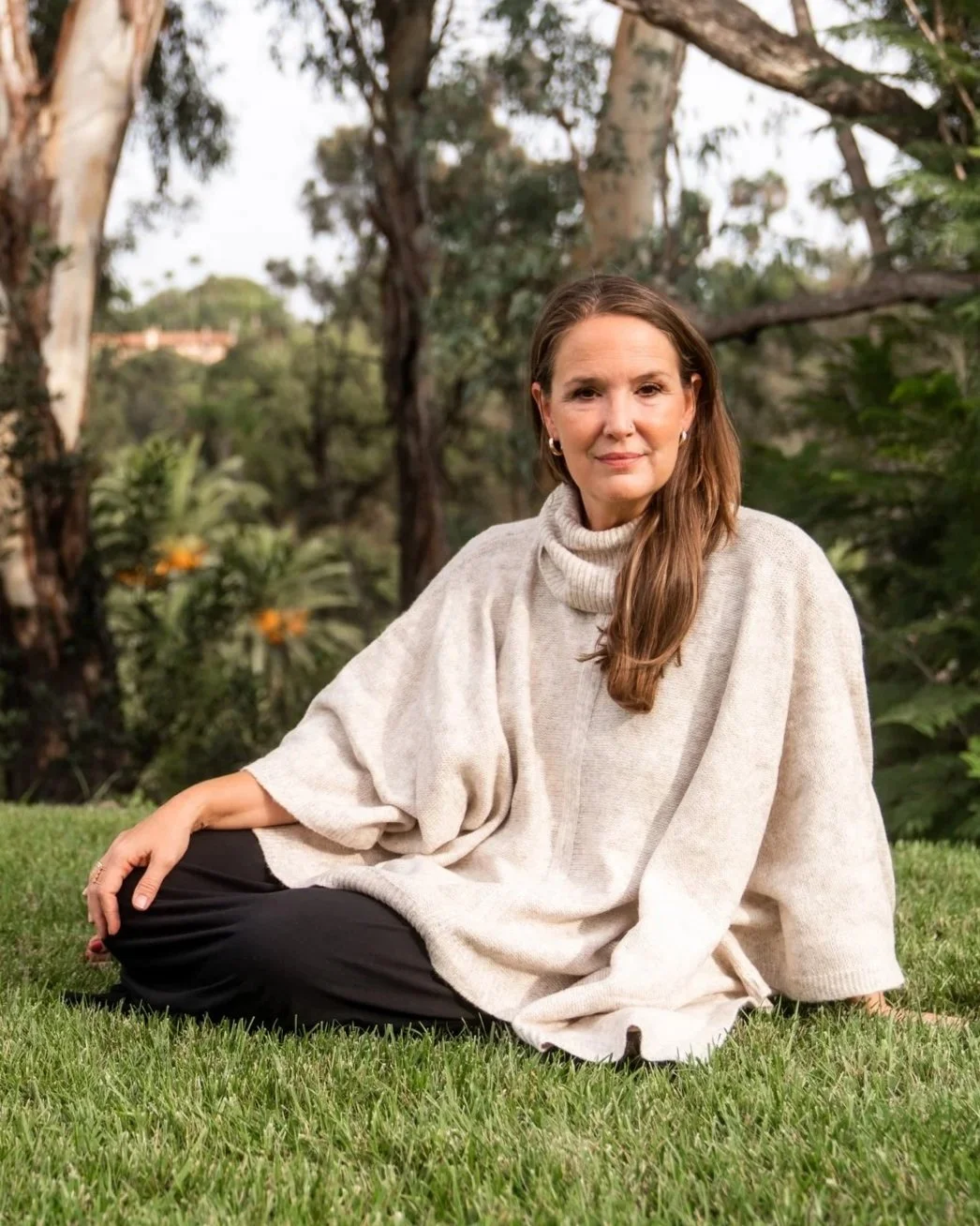
Ro Marlen is a wisdom teacher and somatic guide for sensitive, spiritually attuned Thresholders navigating burnout and relational wounding, often arriving in the body as chronic illness, in a culture that has forgotten how to belong.
Her work restores the Ground beneath healing: the remembrance that your body is Land, your lineage is living, and the world you are healing within is as sentient as you are.
She is the founder of The Sacred Evolutions Wisdom School. Through Rewild Yourself and the wider body of work at SEWS, she offers a living path back to what the Overculture worked hard to make you forget, and forward into what you are still becoming.
Her writing invites you to slow down, listen through the body, and remember the intelligence that has been living you all along