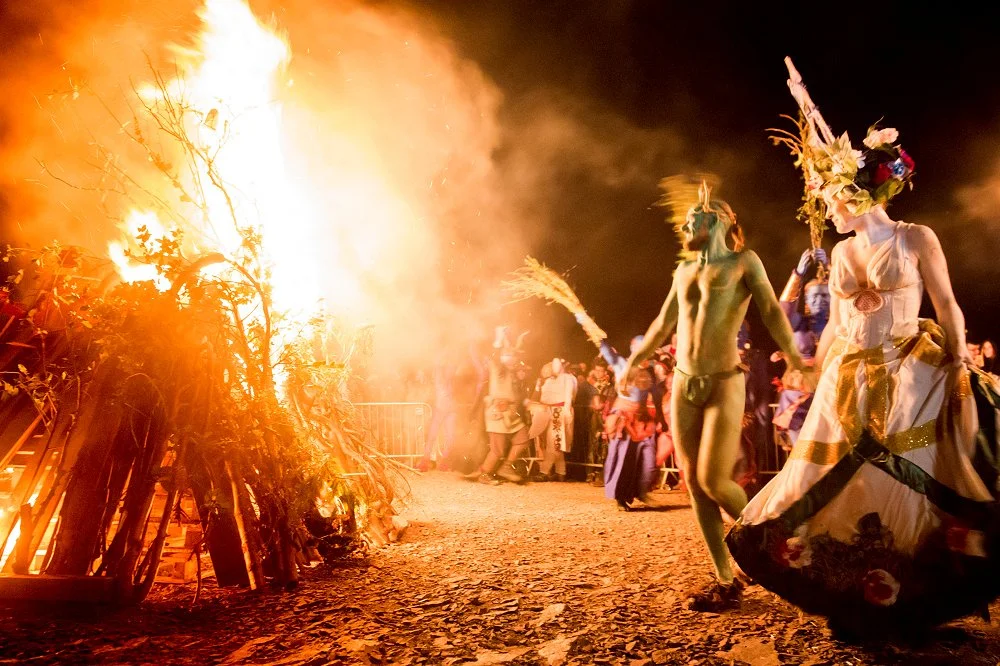
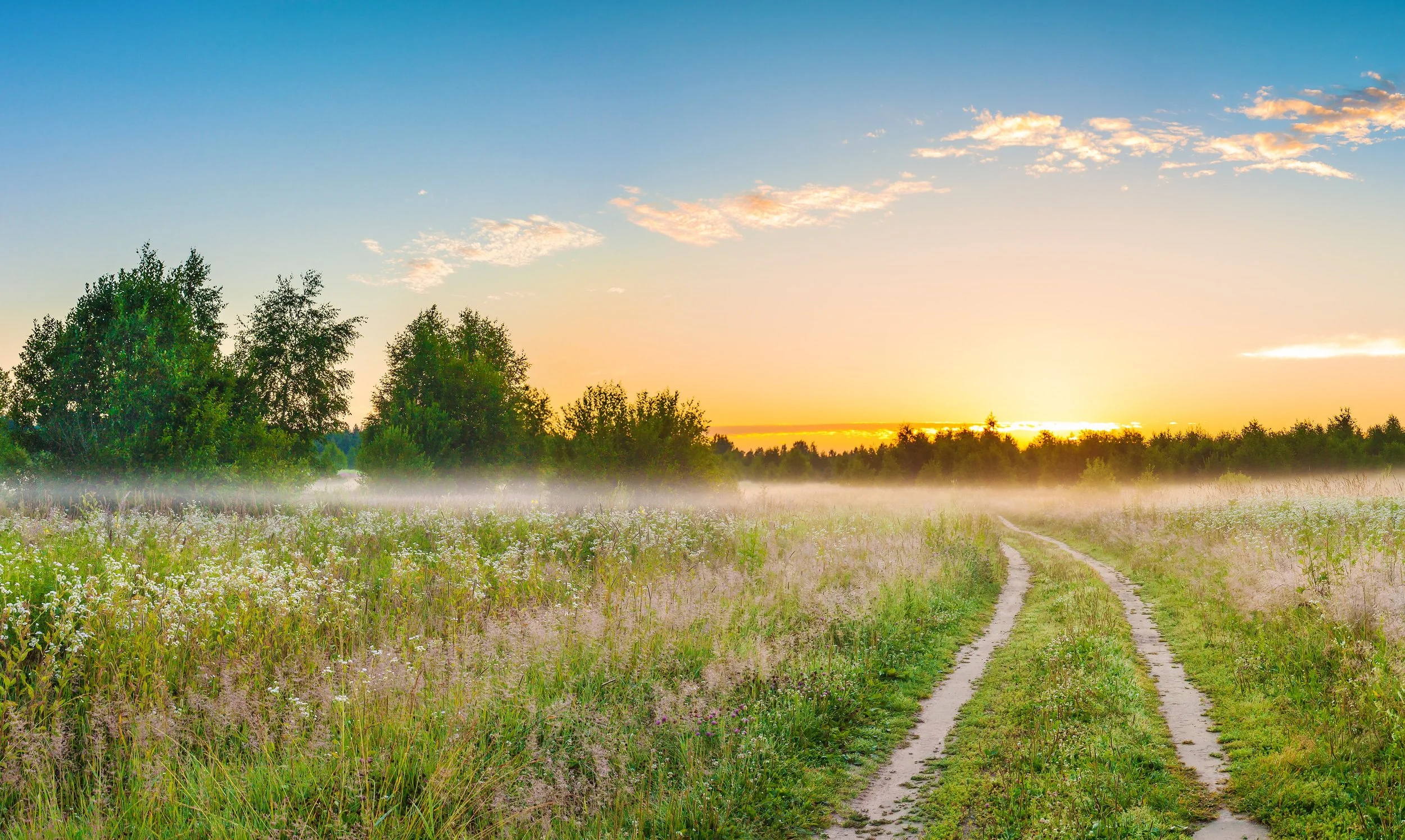
On the eve of May Day, across the hills of Ireland and the mountain peaks of Central Europe, fires were lit — great bonfires kindled from friction on hilltops by people who understood something we have largely forgotten, which is that human ceremony and the living world are one breathing system, and that when the community gathers and drums and dances and lights the sacred flame, the land responds. These are the Beltane and May Day rituals our ancestors practiced for thousands of years across the Celtic and Germanic worlds, and what follows is an invitation to remember what they knew, and why it still matters to the living world beneath your feet.
These Are Not Myths. This Is Memory.
What you are about to read is recovered, ancestral, and yours. German philosopher and matriarchal studies scholar Heide Göttner-Abendroth documents in The Goddess and Her Heroes [Anthony Publishing, 1995] that the ceremonial traditions woven into European seasonal life — the sacred fires, the community gatherings, the rites of the cross-quarter days — survived among farming and country people across Europe well into the late Middle Ages, when the church moved against them deliberately and systematically, because they worked.
What the Church Understood
The Puritans were explicit about what they were doing. When they banned the Maypole in the mid-1600s and moved against what they called the “greenwood marriages” of Beltane Eve, one pastor recorded that if ten maidens went out to celebrate May, nine came home having lain with their beloved in the forest. What the church named scandal, the people understood as ceremony — as acts of participation in the season, in the living world, in something far larger than any individual body, and the suppression was so thorough and so deliberate precisely because those in power understood the potency of what they were ending.
If you carry Northern or Central European ancestry — Irish, Scottish, Welsh, Germanic, Scandinavian, Slavic — these traditions are yours, and reclaiming them is not appropriation. It is remembering.
Fire: The Threshold Is Lit
On Beltane Eve, every hearth fire in the community was extinguished — every one, the households going dark together — and then on the hilltops, the druids kindled new fire from friction, drawing it from the meeting of wood against wood and the body’s will to begin again. Two great bonfires blazed, and the cattle were driven between them three times to receive the fire’s blessing for the summer ahead, and then the people walked between them too. When the ceremony was complete, each household carried flame home from the sacred fire to rekindle their own hearth, so that the whole community shared one fire, one life force, made continuous.
Walpurgisnacht — The Same Fire, Another Name
Across Central Europe on the same night — April 30th, the eve of May Day — the Germanic peoples lit their Maifeuer on hilltops and mountain peaks, and the Wise Women gathered at those sacred high places to light fire and dance and drive out winter’s stagnant energy with noise and flame and movement. What the church later called the witches’ sabbath was the Tanz in den Mai, the dancing of the May in, the community’s body doing exactly what the season required. Celtic and Germanic peoples, Irish and German — at the root they share the same Proto-Indo-European ancestors and the same understanding, which is that fire clears the threshold and calls summer forward.
Saining, Glanadh, Räuchern: The Smoke That Blesses the Threshold
Before the Beltane fire was lit, and in its smoke, and in the days that followed, the threshold was also tended with smoke — and every European culture that observed this cross-quarter day carried its own name for the practice, its own sacred plants, its own way of moving through the house and the byre and the body with fumigation. The names differ across the traditions, but the understanding beneath them is one.
In Scotland it was called saining, from the Gaelic seun, meaning a protective charm, and it was done with branches of juniper that had been dried beside the fire the night before. Those branches were lit and carried through every room until the smoke filled the house entirely, thick enough to make the inhabitants cough and sputter, and only then were the windows thrown open so that winter’s residue went out with it. What had been cleared could now receive the new season. At Beltane specifically, juniper boughs were thrown onto the great fires themselves, so that when the cattle walked between the flames and the people followed, the smoke that blessed them carried juniper’s particular medicine — purifying, protective, and as old as the tradition itself.
In Ireland the practice was called glanadh, from the Old Irish word for cleansing, and it worked the same way — juniper berries or branch, burned at the threshold between seasons, so that the Bealtaine fire traditions and the glanadh were not separate ceremonies but one continuous act of tending, where the fire cleared what was gross and the smoke cleared what was subtle.
In the Germanic and Alpine traditions, it was Räuchern, the smoking, carried out with a Räucher-Pfanndl — a pan of glowing coals taken from room to room throughout the house — with the plants chosen carefully for what the moment required. Juniper, called Wacholder in German and whose name carries the same Proto-Indo-European root as the word “holy,” was used for deep clearing and protection, while mugwort — Beifüß, the plant of transitions — was burned for opening the way and supporting what was arriving, and pine resin brought strength and continuity. The Alpine tradition of bundling nine herbs at the cross-quarter days into the Kräuterbuschen, consecrated and hung to dry, understood that the threshold needed tending with whatever the Land itself offered for the purpose.
What Smoke Knows
There is something the smoke tradition understands about thresholds that most modern seasonal practice has lost, which is that crossing from one season to the next is not simply a matter of letting go of the old and calling in the new — there is a space between those two movements that requires its own tending. What moves between seasons leaves residue in the house, in the body, in the community’s shared field, and smoke is how our ancestors addressed it, carrying intention through space and into the places that water and hands cannot reach, clearing what has settled into corners and bones over the long months of the outgoing season. The juniper branch, the mugwort bundle, the pine resin on the coals — these are your lineage, and they are yours to recover.
Water: Brigid and Her Sisters Bless the Morning
After the fire of Beltane Eve, the threshold moved to water. Before sunrise on May Morning, people went to the holy wells and sacred springs, walking sunwise around the well and praying for health and leaving offerings — coins, ribbons, clooties tied to the branches of nearby trees — because the first water drawn from a well on Beltane morning was understood to be the most potent, carrying the blessing of the threshold into the body of whoever received it.
And then there was the dew. Across the British Isles and into the Germanic lands, people rose before dawn on May Morning to wash their faces and hands in the morning dew from oak and rowan trees, from the grass of the fields, from the hawthorn in first bloom, and the dew was gathered in glass bottles and kept through the year for healing, understood as the land’s own medicine freely offered at the threshold between dark and light.
Brigid Tends the Waters
The goddess who holds this threshold moment has many faces across the European world, and in Ireland and Scotland she is Brigid, keeper of both the sacred flame and the holy well, the one who tends fire and water together at every crossing. Across the continent her sisters move through other names — Nerthus in the Germanic north, Freyja in the Norse tradition, Flora in the Roman world, Živa among the Slavic peoples — but she is the same presence at every threshold where the community turns toward the living world, and Brigid carries the fire of Imbolc all the way to the May Morning well, where water completes what fire began. When you rise before dawn and go to the Land and wash your face in the dew before the day begins, your skin open and receiving — that is the body meeting the living world on its own terms.
The Maypole: Dancing the World Tree
What we now think of as a charming folk custom was originally something much more significant. The Maypole was a living birch brought from the forest with great ceremony, stripped of its branches and planted at the center of the community’s gathering place, and Dr. Rune Hjærnø Rasmussen, historian of religion and author of The Nordic Animist Year [nordicanimism.com], situates this practice within the deep animist knowledge of Northern Europe — the Maypole as axis mundi, as World Tree, the cosmic pillar that connects the roots of the underworld to the branches of the upper world, the same Yggdrasil that runs through the entire Northern European cosmological tradition, embodied now in a living tree held upright at the center of the dancing.
The colored ribbons held by the dancers as they wove and unwove around the pole were the community’s relationship to the axis of creation made visible, and as men and women alternated around it they were enacting what the cosmos was already doing — not watching the season arrive but participating in how it arrived.
Tanz in den Mai — Love as Ceremony
In the Germanic tradition, the Maibaum took a more intimate form, where each year on the night of April 30th, young men would fell a birch from the forest and decorate it with colored ribbons and carry it through the dark to plant it before the house of the woman they loved, and then stand guard through the night to protect it until sunrise. The young women meanwhile danced until dawn and then came home to find whether they had been seen, whether someone had claimed them with a tree. This is Holda’s golden young bridegroom — goldener junger Freier — riding out to meet his beloved in the warmth of early summer, love made visible and devotion witnessed by the whole community, the sacred marriage enacted in a thousand villages at once, one birch tree at a time.
The Sacred Marriage: What Humans Enact, the World Becomes
At the heart of Beltane stands a marriage. The Holly King has ruled since Midsummer — the dark twin, the lord of the waning year — and at Beltane the Oak King takes his throne, so the Green Man, face wreathed in leaves and new growth, comes forward to meet the May Queen, who is the flowering earth herself, Brigid in her summer face, the Flower Bride Blodeuwedd woven from blossoms in Welsh myth, and their union is the season’s turning made flesh.
And in their marrying, something is activated that goes beyond the symbolic. This is what runs beneath all of these ceremonies, the understanding the Overculture severed us from, which is that microcosm mirrors macrocosm — that what humans enact in ceremony, the living world enacts around them, and that the people are not observers of the season’s turning but the mechanism of it. Their bodies and their drumming feet and their fire and their love made visible in the forest and at the Maypole are how the forces of summer are called into full expression, and the ceremony and the cosmos are one breathing system that calls the other forward.
Into the Forest
This is why the young couples went into the greenwood on Beltane Eve — not for transgression but to step into the roles of the forces themselves, to be the Green Man and the May Queen in ten thousand bodies across the Land, so that what they expressed in their loving the earth could express in its flowering, and the forest received them and the season completed itself through them. This is the animist cosmology lived in the body rather than theorised about — what you express, the world around you enacts, and the ceremony is not merely symbolic but causal.
The Ground Beneath the Dancing Feet
Mycologist Paul Stamets has observed something that would not have surprised our ancestors at all. In a 2023 post he wrote: “There are time-honored traditions and celebrations that create sounds and vibrations that reverberate throughout surrounding ecosystems. Sound and vibration stimulates mycelial growth… every human celebration that initiates fungal activity becomes a cyclical celebration of Life.” [paulstamets, TikTok 2023]
The science beneath this is precise and elegant: mycelium — the vast underground network that feeds every forest and every field — responds to low-frequency vibration the way it responds to thunder, because thunder precedes storms and storms bring rain, and over millennia the mycelium learned to read that vibration as a signal that conditions were shifting and that it was time to grow. Our ancestors dancing around the Beltane fire and pounding the earth with their feet and drumming through the night of Walpurgisnacht were activating the network beneath their feet, telling the mycelium that summer was coming and that it was time to produce abundantly, and the land was listening and the land responded. Ceremony was a relational technology for participating in the living world’s own processes, and the living world was always the other half of the conversation.
Come Back to the Fire
The season is already moving toward you and your body already knows the direction, so what follows are simple ways to meet it.
Light a fire on May Eve — a bonfire if the land allows, candles if not — and let the flame be intentional rather than decorative, something that marks the threshold. Walk between two candles if you can and feel what shifts in your chest as you do.
Rise before sunrise on May Morning and go outside, letting your bare feet find the earth, and if you find dew wash your face and hands in it, or in water you’ve left outside overnight under the stars. Go to a body of water and leave something at its edge — not as transaction but as relationship, because you know the difference now.
Find a tree in blossom, hawthorn if you can or whatever is flowering where you are, and sit with it for a while before you bring a branch inside to decorate your doorway, letting your home know the season has turned.
Make noise and dance and let your feet pound the earth with intention, knowing that the mycelium is listening and that the Green Man is waiting for the Oak King to take his throne and that the season is ready to complete itself through you.
If you feel the call of this threshold as something older than seasonal mood — something that lives in your bones and your lineage — Rewild Yourself [https://www.romarlen.com/rewild-yourself] is where we build the Ground that makes all of this possible, and the Igniting the Fire of Belonging free class [URL placeholder] opens at Beltane for exactly this reason: to meet you here, fire in hand, at the threshold.
Reflection Questions
Sit with these in the days around May Day:
1. Which of these traditions feels like recognition — something your body already knew before your mind caught up?
2. If you knew the living world was listening and responding to what you enact — what would you bring to this threshold?
3. Where in your life is the Oak King arriving? What is taking its throne, coming forward, ready to lead?
4. What part of your lineage are you ready to remember?
5. What would you tend or offer at the well, the fire, the tree — as relationship rather than ritual?
The Fire Has Always Been Lit
Somewhere in your ancestry, someone stood between two fires on a May Eve and felt the season move through them, and someone rose before dawn and walked to the well in the dark, and someone danced until sunrise around a tree brought from the forest with love, and someone went into the greenwood and came home changed. These are sleeping traditions, and the season, every year, sends the same invitation — come back to the fire, come back to the well, come back to the living world that has been waiting for you to remember that you are part of it.
The mycelium is listening and the Green Man is dancing, and the well is full, and the land needs you to show up. Come and receive what is being offered, and offer what only you can bring. And if you are ready to make this more than a once-a-year remembering, if you want to learn to live in conversation with the living world all year long, Rewild Yourself [https://www.romarlen.com/rewild-yourself] is where that begins.


Ro Marlen is a wisdom teacher and somatic guide for spiritually sensitive Thresholders navigating burnout, chronic illness, and relational wounding in a culture that has forgotten how to belong. Her work restores the Ground beneath healing—reconnecting body, Land, and lineage so sensitive people can live their gifts without burning out.
She is the founder of The Sacred Evolutions Wisdom School, a living body of work devoted to embodied remembrance and regenerative culture. Through her foundational course Rewild Yourself, seasonal immersions, community gatherings, and free rituals and teachings, Ro offers multiple entry points into the same core truth: healing is not something you achieve—it’s something you return to.
Her writing invites readers to slow down, listen through the body, and remember the intelligence that has been living them all along.