Thresholder: The One Who Rides The Fence
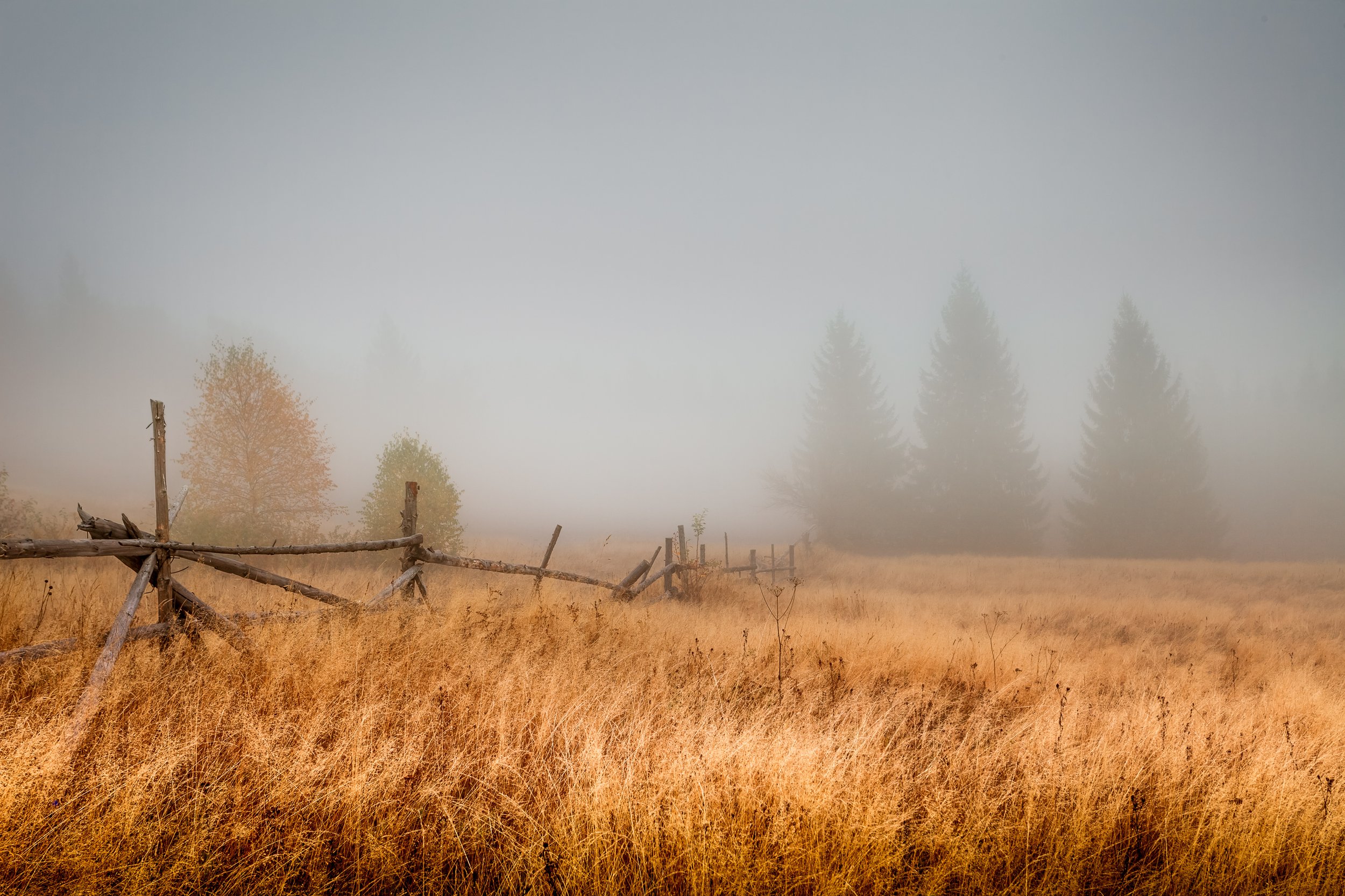
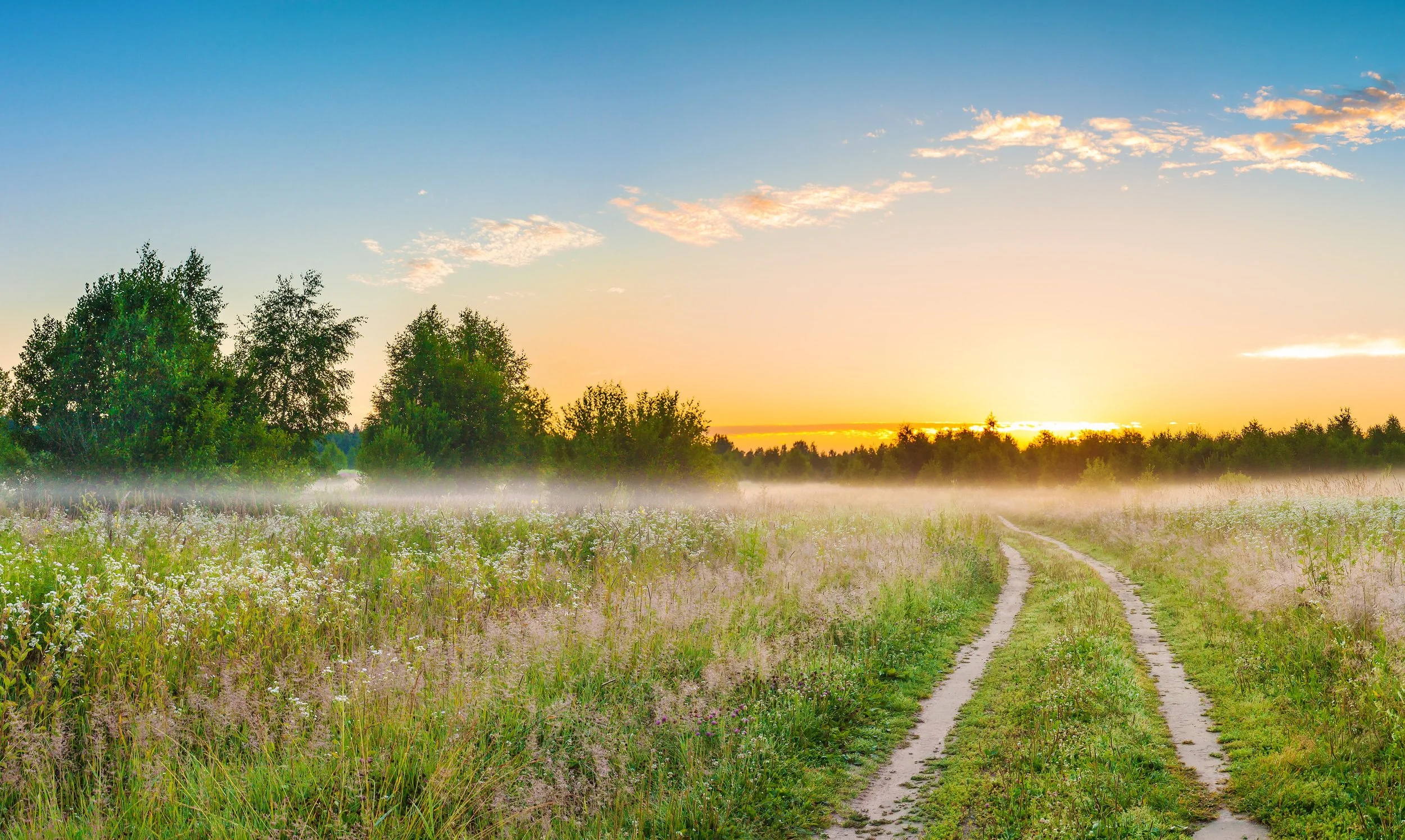
The threshold is a real ecological place — the fence line, the meadow edge, the hour when one world fades into another.
The threshold is a real ecological place — the forest edge where two distinct worlds meet and neither fully claims it, the tide line where sea and shore exchange shape with every wave, the hour of dusk when the light belongs to neither day nor night. These are zones of heightened exchange. Unstable, generative, essential to life's renewal. They cannot be rushed, nor can they be owned. And in every culture that has remembered how to tend the living world, there have always been people born to inhabit them — people whose perception, nervous system, and very soul is tuned to the frequencies of the in-between. What is a Thresholder? It is the name I give to this person — to you, if you have always sensed more than the world had language for, always stood slightly outside of things. If something in you has always known. This post is the most direct answer I can give to that question: who you are, where you come from, and why this particular moment in history needs what you carry.
What Is a Thresholder
A Thresholder is someone who lives at the meeting edge of worlds — part spirit, part soil, never fully at home in either.
“Their power does not come from choosing a side or bridging both. It comes from inhabiting the edge itself.”
This is not a personality type, nor is it a diagnosis, spiritual achievement, or sensitivity spectrum. It is a soul function — a calling that arrives with the body, whether or not the culture around it has the language or the wisdom to receive it.
Thresholders are born with a perception that extends beyond what is immediately visible. They feel the emotional weather of a room before anyone speaks. They sense what is forming in relationships, communities, and the wider world before it becomes legible to others. They carry the grief of the Land in their bodies. They hear the dead. They know things before they can explain how they know them.
In a culture built for certainty and speed, this tends to show up first as suffering.
The Cosmology of the In-Between
In the Norse creation myth — one of the ancestral traditions I teach inside this work — creation begins with a void.
Between the realm of ice, Niflheim, and the realm of fire, Muspelheim, there was Ginnungagap — the Yawning Void. And when the ice and fire met in between, Ginnungagap was as mild as windless air. When the breath of heat met the lacy frost so that it melted and dripped, life was quickened from the yeast-drops.
[Snorri Sturluson, Prose Edda, Gylfaginning, c. 1220]
Fire and ice create by meeting in the space between them. The in-between is the most real place of all. It is where life begins.
“ The Thresholder’s function is to tend this space — to stand at the threshold where opposites meet and hold it open long enough for something new to emerge. ”
Her capacity to hold fire and ice simultaneously, without collapsing into either, is not a spiritual achievement she has earned. It is what she was made of. And in that holding, a third force arises: something genuinely new, something that could not have emerged from fire alone or ice alone. Right action. Creative possibility. Life.
Hereere is the part that matters most: this does not only happen inside her. When a Thresholder holds that quality of space — regulated, grounded, present at the threshold — it creates the conditions for something new to emerge in the people around her. In the room. In the relationship. In the community. The Thresholder is not only doing this work for herself. She is holding the space in which others can become.
In the Norse cosmological frame I work with, Yggdrasil — the World Tree — connects all realms through a central axis. I teach that this axis lives in the body: the center line that runs through the three centers of awareness, from ground to heart to head, what I call the Three Hearths. This is the rainbow bridge the Thresholder inhabits. This is where her power actually lives. Not above the body or outside it, but through it.
This is why so many sensitive people with genuine threshold gifts find themselves depleted and disoriented: they have been taught, implicitly or explicitly, to leave their bodies to access what they sense. To float upward, to travel out. In doing so, they cut themselves off from the very Ground that makes threshold work possible.
The teaching I offer runs counter to much of what passes for grounding in contemporary spiritual spaces — the instruction to root downward, anchor, and drive yourself into the earth.
“Real Ground is not a direction. It is a quality of relational presence. ”
Kombumerri person with ties to Wakka Wakka land, elder and philosopher Mary Graham teaches that we are always in two fundamental relationships: with ourselves, and with our environment.
When your awareness expands laterally — inhabiting your own body and the living field around you, the Land beneath your feet, the air on your skin, the presence of what surrounds you — you are in Ground. Not because you have anchored yourself in place, but because you have entered into right relationship with where you are.
“Your nervous system registers: I am here, and I belong to what is here. The field holds you. ”
From that relational presence — not from upward travel, not from downward anchoring alone — the full range of threshold work becomes possible without sweeping you away.
[Mary Graham, in conversation with Tyson Yunkaporta, The Other Others podcast; see also Graham, 'Some Thoughts about the Philosophical Underpinnings of Aboriginal Worldviews', Australian Humanities Review, 2008]
The Thresholder inhabits her center line — fully in her body, fully in relationship with her environment — and from that rooted presence she can hold the space where opposites meet. That is what makes her powerful. Not altitude. Embodied belonging.
“This is the true nature of the work. The Thresholder does not force change. She holds the space in which change becomes possible. And that requires Ground she cannot afford not to build.”
The Name and Where It Comes From
I coined the word "Thresholder" in 2023 while sitting at my dining table, writing a poem. I had been trying on other names — the Medial Woman from Toni Wolff's Jungian framework, Threshold Tender from my own reaching toward something more precise. Still, none of them landed with the particular solidity a right name carries in the body. Then Thresholder arrived, and with it came what I can only describe as a compacting — my body settling, becoming more easeful, more itself, like being named correctly after a very long time of being called the wrong thing.
“The deeper ancestral name in my own Old Southern German lineage from the Allgäu is Hagazussa — the fence-rider, the one who lived at the boundary between the seen and unseen worlds. ”
The Norse tradition knew her as the Völva. The Irish as the Bean Feasa. The Scottish as the Taibhsear. The Welsh as the Gwrach. Every pre-Christian European tradition had a name for this person and a role for her in the community — not as a problem to be managed but as an essential function, as necessary as the healer or the midwife. You can read the full accounting of those names in the Signs of Spiritual Sensitivity post. What matters here is this: the word Thresholder is new. The person is ancient.
She Has Always Existed
Before the Overculture — a term Clarissa Pinkola Estés gave to the systems of dominant culture [Clarissa Pinkola Estés, Women Who Run With the Wolves, 1992] — held these structures intact, the Thresholder was a specialist. Her community recognised her gifts early and took her to be trained. She was given elders, lineage, practice, and purpose.
“Her permeability — the very quality that exhausts her when she is unsupported — was understood as a technology. ”
She could feel what others could not, and that made her essential for tending what others could not tend: the relationship between the living and the dead, between the human community and the Land, between what is visible and what is forming just beneath the surface of things.
The burning times, the Inquisition, and the systematic destruction of the wise woman tradition across Europe not only killed individuals. They dismantled a structure — the container that had held the Thresholder, trained her, and given her work to do. What was left was the capacity without the container. The perception without the practice.
“Generation after generation of people born with threshold gifts and no community equipped to name them, no elders to take them in hand, no initiation to give their suffering its proper meaning, and no direction to give their gifts their proper channel.”
The threshold-keeping function was not confined to one gender. The third-gender shamans of the Sami tradition, those who were neither male nor female but double-sexed, gadniha, were understood as holding a distinct and powerful position precisely because they inhabited the boundary between masculine and feminine as well as the boundary between worlds. The Scythian enarees, recorded by Herodotus and Hippocrates, were male-to-female shamans who were said to be the most powerful seers of their people. Odin himself, the greatest master of seiðr, crossed gender in service of the work. The pattern is consistent: those who live at the threshold between worlds often live at the threshold between genders too. Not because gender transgression makes someone a Thresholder, but because the same soul that cannot be confined to one world often cannot be confined to one gender either. The threshold runs through everything.
What Was Lost When the Container Broke
This is why so many Thresholders arrive at this work carrying not just their own wounds but the accumulated weight of generations of unwitnessed, untrained, unmothered, and undirected threshold capacity.The chronic illness, the burnout, the sense of not belonging anywhere — these are not personal failures. They are the predictable result of a function operating without its proper support structure.
This is also why the work of recovery is not only personal. It is cultural. Building the conditions in which Thresholders can be trained, held, and sent back into the world with their gifts intact — this is the work of what comes after collapse. This is the transitional culture we are here to build.
The Poem That Named It
This is part of what I wrote that afternoon:
You stand between two worlds, and the veil is thin. It is a strange life —to live standing at the threshold of spirit and matter, to see a truth few can see...I AM different, but — Wyrd not weird.
And later in the same poem:
I am telling my story not because I want somebody to think or say oh wow — she's so special. I want those out there to recognise themselves and come join me in holding the threshold. Because I can't do it alone. We have to come together.
When I began using the word with the people in my community, the response was immediate. Not acquisition — recognition. They did not learn it. They remembered it.
The Two Moments That Moved Me Out of Exile
My own exile from my gifts began early. I was a clairvoyant child who, at eight years old, learned to shut down what I was seeing. For years, I lived at a careful distance from my own perception — functional, even gifted in many ways, but fundamentally homeless in myself.
The first threshold came when a spiritualist medium — my first teacher — saw what I was carrying and named it as real. Not imagination. Not pathology. Real. That acknowledgment mattered enormously, and it cracked open the door.
The deeper shift came later, living in the Allgäu in the Alpine foothills of Baden-Württemberg, embedded in the Land in a way I had never been before.
“I came to understand there that my abilities had not been given to me so I could serve the curiosity of others, or offer hope of an afterlife. They were given to me for a specific purpose: to tend the relationships with the ancestors and the Land spirits, to guide the dead — the work of the psychopomp. ”
That gave me a function I could inhabit, a home I could live in rather than a corridor I was perpetually rushing through. That was the moment exile became territory. Not comfort exactly, but rightful ground.
Are You a Thresholder?
You may already know the answer. But if you are standing at the edge of recognition, these are the signs that tend to mark this life.
You have always felt more than the room could hold. A perception that arrived before you had words for it, and stayed whether you wanted it to or not.
You have been told, directly or indirectly, that you are too much. Too intense, too sensitive, too emotional, too serious, too strange. You have spent years trying to calibrate yourself down to a size the culture around you could accept.
You feel the emotional weather of spaces before anyone speaks. You know when something is wrong in a relationship before it surfaces.
You carry grief that does not always feel like yours.
You are the one people turn to in crisis — and the last one anyone thinks to tend in return.
You hear the dead, or sense their presence. You receive knowing through dreams, your body, and sudden images that arrive unbidden. You have had experiences you have never spoken aloud because you could not find language for them that would not make you sound unstable.
You live with energy that is difficult to contain. Surges of aliveness, heat, or agitation that do not settle easily. Sleep lost to visions, to inspirations that arrive in the small hours, and to tremors of knowing that will not wait until morning. Your gifts can feel less like blessings and more like a current running through wiring that was not designed to hold it. What is needed is Ground sufficient to hold what wants to move through you.
You move through many systems — spiritual, professional, social, familial — understanding the language of each, feeling fully at home in none.
You carry an exhaustion that runs deeper than the body — the cost of being a thresholder without Ground.
Underneath all of it — underneath the exhaustion and the not-fitting and the years of overriding what you knew — there is something that has never gone out. A knowing that you are here for something specific. That this life, strange as it is, has a function. That the in-between is not punishment. It is your work.
“If you recognise yourself here, you are not broken. You are not behind. You are a Thresholder — and the threshold has been waiting for you to come home to it.”
The Four Stages
The Thresholder's journey spirals through four stages that map to the four seasons and to the soul's movement from exile to belonging, from striving to stewardship.
The Exile — Winter
The Exile lives divided: one foot in the visible world, one in the unseen, belonging fully to neither. Sensitivity feels like a burden. The inner phrase of this stage is: I don't fit anywhere.
This is the season of water, of life force, of the deep will to be here. And for most Thresholders arriving at this stage, that will is thin. The ground is frozen. The energy that should be moving has been locked in place for years, by survival, by override, by a culture that never gave them the tools to tend what they carry. They are not waiting for spring. They are learning, for the first time, how to build soil. That is the work of this stage. It does not happen by itself. Nothing grows until the ground can hold it.
The Apprentice — Spring
The shift does not arrive as revelation. It arrives as the first moment she stops overriding what her body knows. A breath taken all the way down. A season felt before the calendar confirms it. One small practice that creates one small moment of being at home in herself. The in-between begins to feel less like punishment and more like initiation, because she has started to build the ground beneath her feet. Maybe I'm not stuck — maybe I'm rooting.
The Fence-Rider / The Hag — Summer
She rides the fence line with grace, belonging to both spirit and matter, meeting point rather than translator. She holds the fire and ice simultaneously, and in that holding a third force arises: something new, something that could not have existed without her. She holds open the space where something new can be born, in herself, in the people around her, in the world she is helping to midwife. Something new is being born through me.
The Weaver — Autumn
The Weaver threads what she has learned into culture. She teaches and tends community, leads with care, not by announcing the new world but by living it. Through her, the world begins to remember rhythm. She does not midwife the transitional culture from a distance. She is its body. Life moves through me.
The spiral does not end. Every Weaver will face a new Exile at the next level of depth. It is more spacious and rooted with each turn.
Locating your ground. Cultivating and tending it. Burrowing into it more deeply with every turn of the spiral. This is the work, at every stage, for every Thresholder, for as long as she is alive and breathing on this earth. That is what Rewild Yourself was built for.
Why the World Needs Thresholders Now
We are living inside a civilisational threshold — the kind that comes every few hundred years, when one world is ending, and the next has not yet taken shape. The old structures are failing. The new ones have not yet been built. In that in-between, something is needed that cannot be manufactured, optimized, or arrived at by thinking harder.
It needs the people who know how to live there.
Dr. Larry Gross, Anishinaabe scholar, coined the term post-apocalyptic stress syndrome — PASS — to describe what happens to a culture in the wake of civilisational collapse: without the assistance of social institutions, post-apocalyptic stress syndrome affects successive generations, and it takes a culture at least 100 to 150 years to fully recover from its effects. [Dr. Larry Gross, Postapocalypse Stress Syndrome and Rebuilding American Indian Communities, cited in Tyson Yunkaporta, Sand Talk: How Indigenous Thinking Can Save the World, 2019]
“Indigenous peoples have already survived their apocalypse and are living inside the long work of recovery. The rest of us are only beginning to understand what we are entering.”
The Transitional Culture
There is a fantasy that runs through much of contemporary spiritual culture — that we can skip the hard part. That consciousness will shift, we will ascend, and a golden age will simply arrive if enough of us hold the right frequency. That is not how civilisational transition works.
“A regenerative, earth-honouring culture cannot be built by bypassing the collapse. It can only be built by people willing to stand in the truth of what is — and from that ground, begin building what comes next.”
That is the Thresholder's function. Not to fix the dying world. Not to announce the new one. To stand at the boundary between them, inhabit their own center line, hold the tension without collapsing into either, and create the conditions in which what wants to emerge can find its shape.
This requires Ground. It requires the capacity to hold your own energy, the foreign energies that come with threshold work, and the grief and disorientation of living in evolutionary times without being swept away by any of it. It requires training, community, and the slow rebuilding of a container that the Overculture dismantled centuries ago.
““The world needs us now — perhaps more than it ever has. It does not yet know how to say so. That has always been the Thresholder’s condition: to be needed before being understood. To show up anyway. To do the work because it is what we were made for.””
Reflection Questions
I invite you to sit with these in your body before you reach for an answer.
Where in your life have you been living as an Exile — and what would it mean to begin treating that territory as home?
Which stage of the arc feels most alive in you right now — Exile, Apprentice, Fence-Rider, or Weaver?
Where in your life is the ground thin right now — and what would it mean to tend it before moving forward?
What have you been carrying that you now recognise as threshold work rather than a personal burden?
If your gifts had been recognised early, and you had been trained, held, and given a direction to grow toward — what would your life look like? What does that image point toward?
What is yours to tend at this particular threshold in history?
What Is a Thresholder — Before You Go
A Thresholder is not a type. It is a function. An ancient, essential, irreplaceable function that every culture which remembered how to live on this earth had a name for, a training for, a place of honour prepared for, and a direction — toward the health of the whole and the generations not yet born, and toward right relationship with all of life.
That orientation has not changed. What has changed is the culture being tended. We are not preserving what was. We are midwifing what is trying to be born.
You did not choose this. It arrived with you. It has been expressing itself through your life — through your perception, your exhaustion, your not-fitting, and your knowing — whether or not you have had language for it until now.
The question was never whether you belong. You belong to the threshold. The question is whether you have the Ground to inhabit that position with intention, with care, and with the full weight of what you carry.
That is what Rewild Yourself is built for. Not to fix you. To give you the soil your gifts were always meant to grow in.
Coming Home to the Edge
Some people spend their whole lives trying to get to the centre — to belong squarely, fit comfortably, and rest in the middle of things.
“You are not those people. You never were. You were made for the edge. ”
You were made for the dusk and the dawn, the forest margin, the tide line, the moment between sleeping and waking when the veil is thin, and something true can come through. You were made to hear what is forming before anyone else can see it, to hold the tension of two worlds without breaking, to tend what others cannot reach, to hold steady the space where fire and ice meet. Where something new can form that could not have existed without you.
The Hagazussa rode the fence line so others could live safely on one side of it. The Völva knew it in her bones, deep enough that Odin himself came seeking her counsel. The Taibhsear carried the two sights, dà shealladh, and was trusted precisely because she could see what others could not. The Bean Feasa, the woman of knowledge, held it for her whole community. Every fence-rider, every threshold-dweller across the old European lineages did not only know what you are beginning to know. They built their lives around it. They were honoured for it. The world was steadier because they were in it.
You are not broken. You are not too much. You are not behind. You are a Thresholder. You belong to the in-between. And the in-between — always, in every culture that remembered how to honour it — belongs.
Come join me in holding it. Because I cannot do it alone, and neither can you.
Begin with the free Come Home to Your Body ritual, or step into Rewild Yourself — the path of remembering Ground and belonging.
If you want the lunar thread that weaves through all of this work, the free Attune to the Moon newsletter is where we begin.
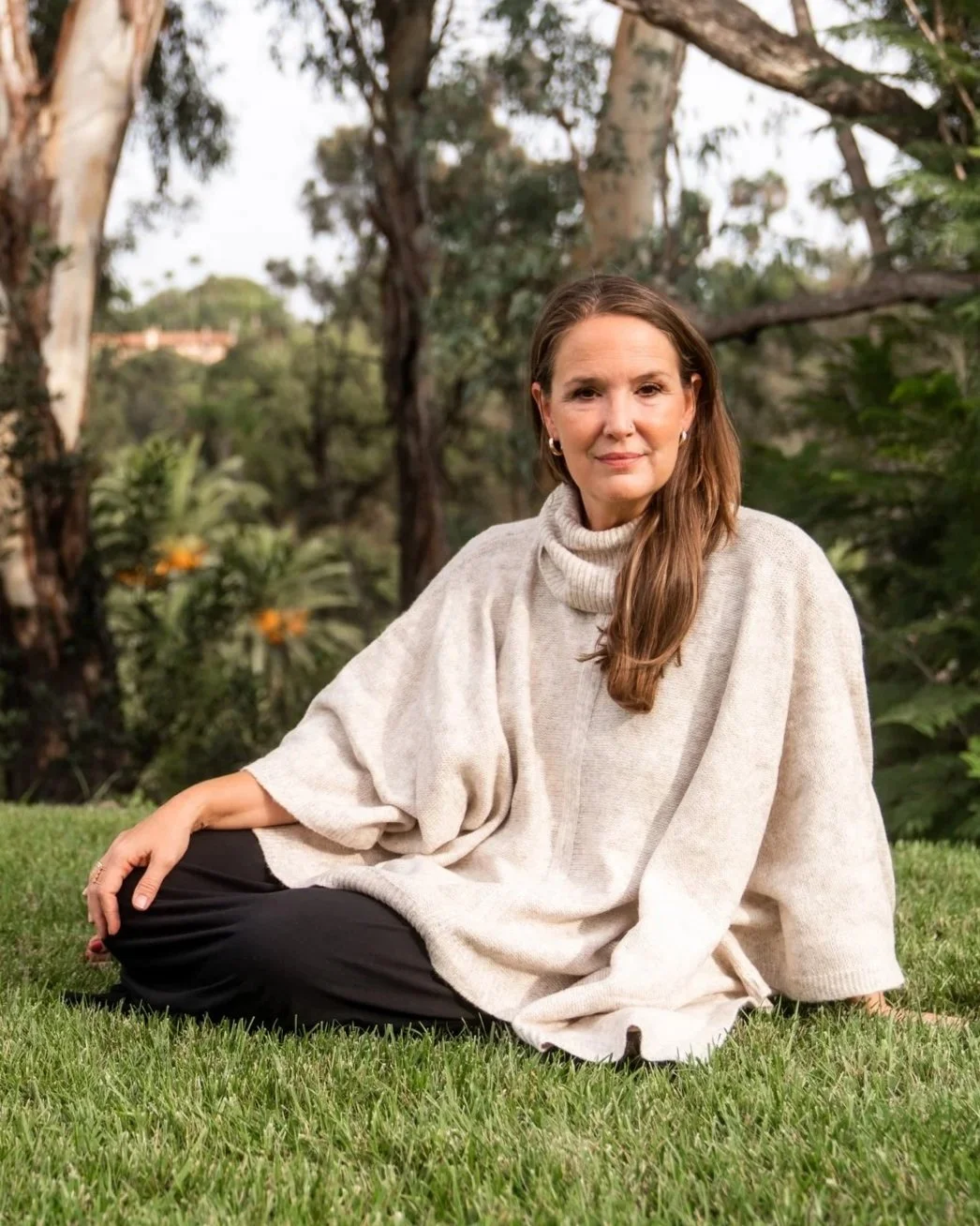
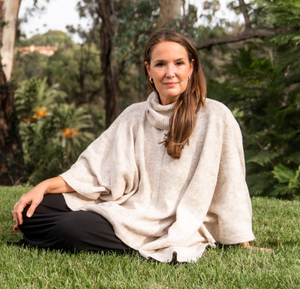
Ro Marlen is a wisdom teacher and somatic guide for sensitive, spiritually attuned Thresholders navigating burnout and relational wounding, often arriving in the body as chronic illness, in a culture that has forgotten how to belong.
Her work restores the Ground beneath healing: the remembrance that your body is Land, your lineage is living, and the world you are healing within is as sentient as you are.
She is the founder of The Sacred Evolutions Wisdom School. Through Rewild Yourself and the wider body of work at SEWS, she offers a living path back to what the Overculture worked hard to make you forget, and forward into what you are still becoming.
Her writing invites you to slow down, listen through the body, and remember the intelligence that has been living you all along