Signs of Spiritual Sensitivity
Explore the Signs of Spiritual Sensitivity with Ro Marlen
Spiritual sensitivity is inborn. Though some claim you can learn it from the right teacher or technique, you can only develop and train what you arrived with. It lives in the architecture of your perception, like in the way your body and awareness register more than what is immediately visible, more than what the room is willing to acknowledge, and so much more than what the dominant culture has language for.
In Western modern systems, this inborn capacity is routinely pathologised, named anxiety, hypervigilance, dissociation, mood instability, or simply being too sensitive. Trauma can amplify it. Neurodivergence can intensify it. Your nervous system absolutely shapes how spiritual sensitivity is lived in the body, but spiritual sensitivity goes beyond the nervous system. While Western science may believe it is simply a survival response, it is perceptual capacity — a way of inhabiting reality that includes what resists measurement and explanation.
The Overlap Worth Naming
Research into sensory processing sensitivity suggests that some people are born with nervous systems that process stimuli more deeply. Judith Blackstone writes of expanded perceptual awareness as a natural human capacity that widens embodiment when integrated rather than suppressed. Resmaa Menakem reminds us that our nervous systems carry not only personal trauma but collective and ancestral stress — the body does not exist in isolation from history.
[Elaine Aron, The Highly Sensitive Person, 1996; Judith Blackstone, Trauma and the Unbound Body, 2018; Resmaa Menakem, My Grandmother's Hands, 2017]
Though these frameworks offer real and useful ground, they don't quite go far enough for me. They describe the nervous system. They do not describe the soul.
Where the Psychological Frame Falls Short
Across cultures, unusual perception has not always been interpreted as disorder. Malidoma Somé described how, in his Dagara tradition, what Western medicine might name psychosis could signal the emergence of a healer, provided there was ritual container and a community to hold the process. Clarissa Pinkola Estés speaks of instinctual knowing as part of the wild psyche — a way of sensing life that precedes social conditioning.
[Malidoma Somé, The Healing Wisdom of Africa, 1998; Clarissa Pinkola Estés, Women Who Run With the Wolves, 1992]
Placed beside one another, these perspectives reveal a wider landscape. What culture calls pathology can, at times, be uncontained perception. Without Ground, or community, that perception overwhelms the body. With containment, it can mature into something else entirely.
When My Body Spoke What My Mind Could Not
I was a spiritually sensitive child. I did not have this language for it then. I only knew that I could see and sense what others could not — feel the emotional weather of a room before anyone spoke, perceive presences and currents and subtle shifts in atmosphere that were not visible to the adults around me. When I shared what I was experiencing, I was scolded and told I had a wild imagination.
There was also capital-T trauma in my childhood stemming from peripheral violence. I suffered many head injuries resulting in concussions. My nervous system was shaped by survival. My nervous system learned hypervigilance as a survival response. Of course it did. When a child lives in unpredictability, their body learns to constantly scan for danger. Trauma sharpens the senses, widens the field of awareness in ways that can feel overwhelming. There was overlap, too, with neurodivergent traits — sensory processing that intensified everything, pattern recognition that moved quickly and deeply, and a social world that rarely felt safe to inhabit. None of this was imaginary or shameful. It was real. It was mine.
The Body That Could No Longer Hold the Wall
But something else was also true. Safety didn't quiet it. There was always more coming through than hypervigilance could account for. There were moments of altered presence that were not panic. Expansions of perception that were not dissociation. Experiences that felt relational rather than defensive — as if spirit and matter were speaking to each other through my body.
I had shut this down at eight years old, as I wrote about in this post [link to What Is Animism post once live]. I had built a wall, and I had lived behind it. But the body has its own intelligence, and eventually what I could no longer bear not to see began to break through. My body reacted the only way it knew how — chronic hives, migraines, vomiting, a nervous system in revolt. Perception that the culture around me named a pathology.
The Moment the Wall Came Down
I was twenty-five when a family member who had died appeared in my living room and spoke to me. It was not a dream. The wall I had spent seventeen years building dissolved in an instant, and everything I had shut down came flooding back.
Not long after, a teacher found me. She recognised what I was carrying and named it accurately — that what I was perceiving was real, and that I could learn to work with it rather than be undone by it. That teaching changed everything. It took another ten years to fully resolve what the opening had set in motion in my body. But it began there — with someone who recognised what I was carrying and named it correctly.
Trauma had amplified my perception. Neurodivergent traits had intensified my sensory field. Beneath both, spiritual sensitivity had always been present. Untangling those threads required patience, containment, and soil.
What Spiritual Sensitivity Actually Looks Like
Spiritual sensitivity is rarely spectacular.It shows up in the way you move through the world and the way it moves through you. These are lived experiences of the threshold — ways of inhabiting the space between spirit and matter, between culture and Land, between visible and unseen.
You Experience Intense Perception
You sit across from someone and feel the weight they are carrying before they say a word. You leave a gathering depleted in ways you cannot fully explain. You notice the moment a room shifts —while the surface is still calm. A piece of music does not undo you not because it is sad but because it is true. You feel the approach of a storm in your body before the sky changes. Sensitivity this precise has a name.
You Live With Expanded Awareness
Dreams linger and feel instructive. Symbols surface repeatedly. Meaning gathers around ordinary moments. You see how events connect across time, how patterns repeat across relationships, how something unspoken shapes what is spoken. Your awareness widens easily. At times, it feels rich and alive. At others, it can feel as though there is no filter — as if the world enters you without pause.
You Have Moments of Altered Presence
There are moments when presence itself shifts. Time stretches or thins. Beauty and grief coexist in the same breath. The boundary between inner and outer softens. These moments are often subtle — in prayer, in nature, in deep conversation, in crisis. Without context, they can be disorienting. With Ground beneath them, they become part of a larger rhythm.
You Struggle in Environments Built on Speed
Spiritual sensitivity belongs to a slower, more permeable way of moving through the world. Spaces built on constant noise, artificial light, emotional suppression, and relentless productivity ask you to override what your system knows. When you do, exhaustion follows. When you ignore what your body registers, something inside tightens. That tightening is data. Your sensitivity is asking for conditions that match it.
You Live at the Edge of Community
There is often a social dimension to spiritual sensitivity. You may feel slightly outside of things — not fully inside the group, yet not entirely apart. You Know what is happening, but you do not always feel at home within it. There is a deep yearning for belonging, for a place where your perception is welcomed rather than managed. Assimilation can feel like self-erasure. What your nervous system is often asking for is not assimilation — it is land-connectedness, the felt sense of belonging to place and season rather than to systems that were never built for you.
A Borrowed Name for Something Much Older
There is a term from Jungian psychology worth knowing here: the Medial Woman. Toni Wolff was Jung's primary intellectual collaborator — the mind behind some of his most essential concepts, who published relatively little under her own name. She described the Medial Woman as the one immersed in the collective unconscious: the mystic, the psychic, the artist who senses the undercurrents of the age before they surface, standing between the known and the unknown.
[Toni Wolff, Structural Forms of the Feminine Psyche, 1951]
It is worth noting that Jung received the majority of the credit for a body of work that Wolff helped build — and that Jungian psychology drew substantially from indigenous cosmologies encountered without proper attribution. Scholars have documented the decontextualised incorporation of indigenous knowledge systems into his framework, particularly following his 1925 visit to Taos Pueblo.
The Medial Woman is a useful descriptor. But it is a twentieth-century psychological term for something far older — an archetype that every pre-Christian European culture recognised, named, and honoured in its own tongue.
She Had Many Names
In the Norse world, she was the Völva — the wand carrier, seeress, and spirit-walker held in such high esteem that even Odin himself sought her counsel. Among the Continental Germanic tribes, she was Veleda, the seeress documented by Rome who guided her people through their conflicts with Roman rule — a woman whose authority was so recognised that she acted as an envoy to the empire itself. In Ireland, she was the Bean Feasa — the woman of knowledge, the walker between worlds, healer, seer, and connector to the Land — and the Fili, the seer-poet whose highest rank was held equal in status to a High King. In Scotland, she was the Taibhsear — the one gifted with dà shealladh, the two sights: the vision of the ordinary world, and the vision of what lies beneath and beyond it. In Wales, she was the Gwrach — ancient, pre-Christian, a wise woman venerated for her healing and her lore. She was also the Dynes Hysbys, the knowing woman who served her community as healer, diviner, and keeper of what the dominant culture could not hold.
Different languages. Different landscapes. The same essential figure: someone born with perception that extended beyond the visible, recognised by her community, and honoured for the very thing the Overculture* would later name a disorder.
The Allgäu Name
In my lineage — from the Allgäu, the Alpine borderland of what is now southwestern Bavaria — she is the Hagazussa. The fence-rider. Hers was the boundary between the human world and the spirit world. The hag was the fence — the hedge, the living boundary line — and she was its keeper. The modern German word Hexe descends directly from hagazussa, and its earliest recorded use in witch- trial documents comes specifically from Switzerland and southwestern Germany — the region where this figure was most deeply rooted. The name is ancient. The Overculture suppressed it — and when it needed to erase the fence-rider entirely, it made her name a slur.
This is the name I carry in my teaching because it is the name of my own ancestral ground. Whatever the regional word across Europe, the function was the same: someone born to inhabit the threshold, recognised by her community, and honoured for the perception that made her essential.
The Overculture took all those names and turned them into slurs. Hag. Witch. Now, we’re too sensitive, too much, or even mentally ill. The reclamation is naming them back.
If You Had Been Born in Another Time
I tell my students this, especially in the hard seasons when everything in them feels wrong: if you had been born in another time, or another culture, your gifts would have been recognised early and not pathologised. You would not have been medicated or taught that you needed to be managed. Someone — a wise woman, an elder, a keeper of the threshold — would have seen what you were and taken you to be trained. Your role would have had a name, and your community would have known what you were for.
That is what the historical record shows, in every tradition we have just named. The Völva was sought out and honoured. The Bean Feasa was the one the community turned to in crisis. The Hagazussa rode the boundary so that everyone else could live safely on one side of it. They were essential figures — central to the communities that held them.
What you are carrying is not a flaw that modern culture has generously failed to punish you for. It is a function. An ancient, needed, irreplaceable function. The only thing that has changed is that the culture that once trained and honoured you forgot how, and then had the audacity to call your disorientation a disorder.
“You are not wrong. You were born out of time. And part of what this work does is give you back the time you were meant to inhabit.”
Spiritual Sensitivity Without Ground — and With It
Spiritual sensitivity is powerful. It widens perception. It thins the boundary between what is seen and what is sensed. It allows a person to live in relationship with currents that others overlook. And without Ground beneath it, that same sensitivity can become overwhelming.
Without Ground
Spiritual sensitivity without Ground leads to burnout — to fragmentation, chronic exhaustion that no sleep fully restores, to identity confusion, not knowing where you end, and the world begins. It can lead to dissociation that is mistaken for transcendence, moments when leaving the body feels spiritual because staying feels unbearable. Your nervous system, shaped by survival, scans constantly even when there is no immediate threat. Spiritual sensitivity needs containment to function, rhythm to settle into, and community and embodied anchoring to keep expanded awareness from becoming overwhelming and isolating.
This is an ecological truth. For an oak to fulfill its nature, the soil must be capable of holding what it carries. Spiritual sensitivity works the same way — it matures into discernment when it has containment, season, and relationship to grow within. Without those conditions, it moves toward depletion instead. The Thresholder collapses when her position at the threshold is unsupported. Ground is her habitat.
With Ground
When spiritual sensitivity finds Ground, something begins to settle. Perception deepens. What once felt overwhelming becomes textured and intelligible. You still feel the weather shift before the storm, and you have roots now that hold you in the gust. Your body learns to receive without bracing, and hypervigilance softens into something steadier, something that can hold intensity as depth rather than weight.
The threshold itself changes quality. What once felt like exile becomes habitat. You are still standing at the forest edge, still attuned to dusk and dawn — but now your feet are on soil. You are not trying to live in the centre of systems that were never designed for you. You are inhabiting your position consciously.
“You do not need less perception. You need Ground beneath it.
”
Ground is embodied; it lives in the nervous system as safety built slowly over time. It moves with seasonal rhythm, allowing energy to ebb and return rather than demanding constant summer. It grows in community containment and in being witnessed by those who can hold expanded awareness without fear. It tends the places where trust has been broken. It anchors in Land, letting the body remember its belonging to something older than culture. It restores land-connectedness, one season at a time.
Reflection Questions
Sit with these in your journal, your body, or simply while you walk.
Where did your sensitivity first get named as a problem — and what did it cost you to accept that naming?
What parts of your perception feel shaped by trauma — and what parts feel older than that?
Where do you feel most alive — in the centre of things, or at the edge where currents meet?
When overwhelm rises, what kind of soil does your nervous system long for — quiet, touch, rhythm, solitude, trusted witness?
If you were to consciously inhabit the threshold rather than resist it, how might your experience of belonging begin to shift?
Spiritual Sensitivity Is a Position, Not a Flaw
You were born accurately perceiving a world that is genuinely alive — and then raised inside a culture that had declared that aliveness inadmissible and your perception a liability.
The signs of spiritual sensitivity are evidence of a specific perceptual architecture —one with a name that predates psychology, diagnosis, and the Overculture's insistence that only what can be measured is real.
There is a path from overwhelm to discernment, from fragmentation to Ground, from the exhaustion of uncontained perception to the ecological intelligence your sensitivity was always meant to become. That path is whatRewild Yourselfwas built for — to give your perception the soil it has always needed.
If you are ready to begin somewhere simpler, the Come Home to Your Body ritual is a free threshold back into felt relationship with your own body. Start there. The rest follows.
The Barometer and the Storm
The barometer reads the storm, feeling the pressure shift before the sky darkens, before the air has fully changed. The one who feels it first is attuned.
You have always sensed what is forming in a room, a relationship, in the wider world. You have felt the subtle turning of seasons in your own body. At times, that awareness has left you exhausted, uncertain, wondering why you cannot simply stand in the centre and rest there.
Dawn belongs. Dusk belongs. The forest edge, the tide line, and the mycelium beneath the soil all belong.
The Hagazussa belonged. The Völva belonged. The Bean Feasa belonged. The fence-riders, the threshold-dwellers, the ones who sensed the living world through every pore were the village's medicine.
You are a Thresholder. You belong to the in-between. And the in-between, always, in every culture that remembers how to honour it, belongs.
The world needs us now, perhaps more than it ever has, and it is still finding language for that need. That has always been the Thresholder's condition: to be needed before being understood, to show up anyway, to do the work because it is what we were made for.
If you are ready to build the soil that can hold your perception, I invite you to join me in Rewild Yourself — a living path of remembering Ground and belonging.
Or begin with the free Attune to the Moon newsletter and let the lunar cycle become your first teacher.
The world is alive. Your perception of that has always been correct.
*the Overculture, a term Clarissa Pinkola Estés gave to the systems of dominant culture
A note on sources: When I cite someone's work, I'm pointing to a specific idea that's relevant — not endorsing the whole person, their full body of work, their ethics, or their worldview. I've learned from teachers and thinkers whose other choices I wouldn't recommend and whose frameworks I find partially or significantly flawed. That's the nature of learning from many streams. Discernment is always yours to bring — and I trust you to bring it.

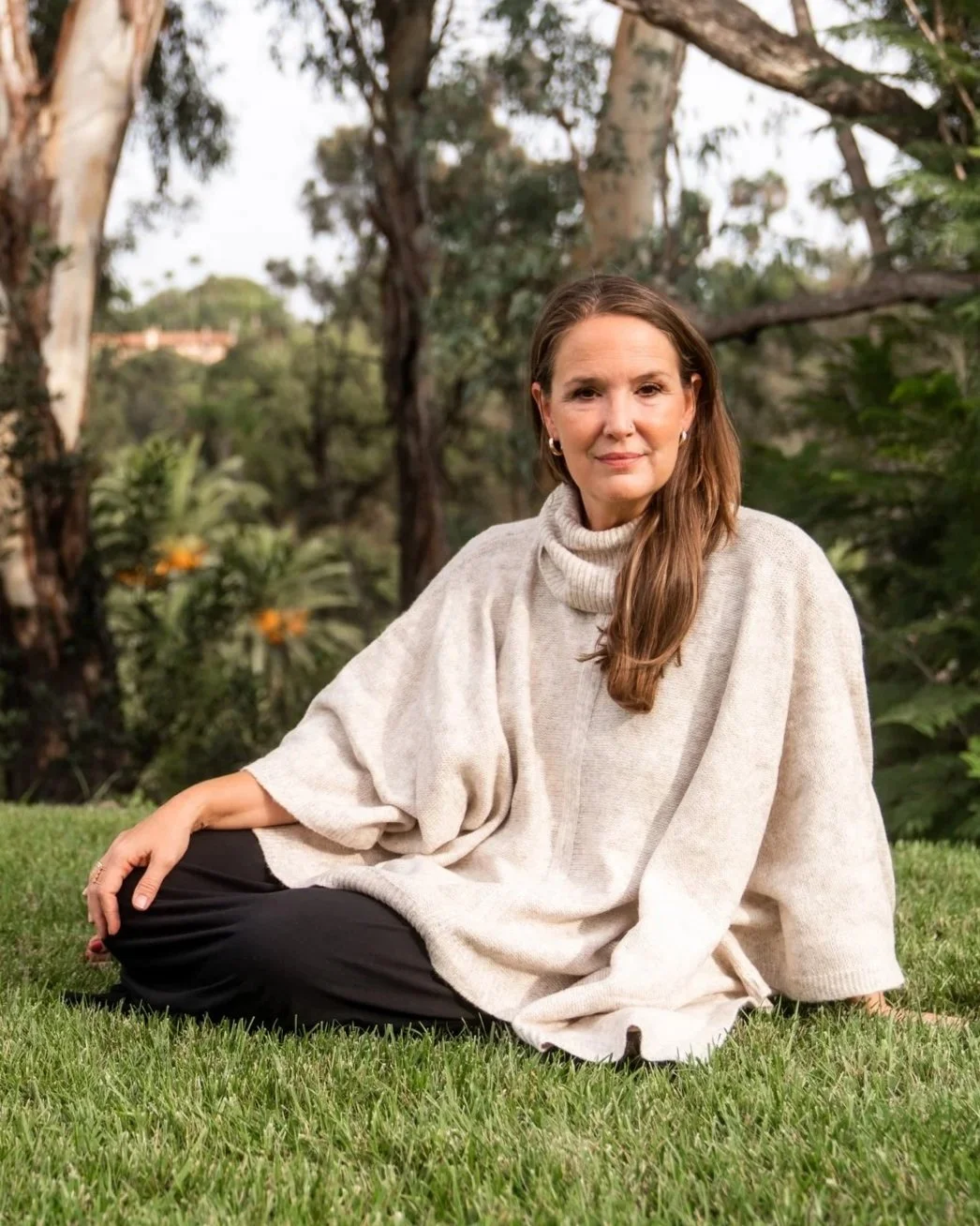
Ro Marlen is a wisdom teacher and somatic guide for sensitive, spiritually attuned Thresholders navigating burnout and relational wounding, often arriving in the body as chronic illness, in a culture that has forgotten how to belong.
Her work restores the Ground beneath healing: the remembrance that your body is Land, your lineage is living, and the world you are healing within is as sentient as you are.
She is the founder of The Sacred Evolutions Wisdom School. Through Rewild Yourself and the wider body of work at SEWS, she offers a living path back to what the Overculture worked hard to make you forget, and forward into what you are still becoming.
Her writing invites you to slow down, listen through the body, and remember the intelligence that has been living you all along