The Meaning of Imbolc and the First Stirring of Spring
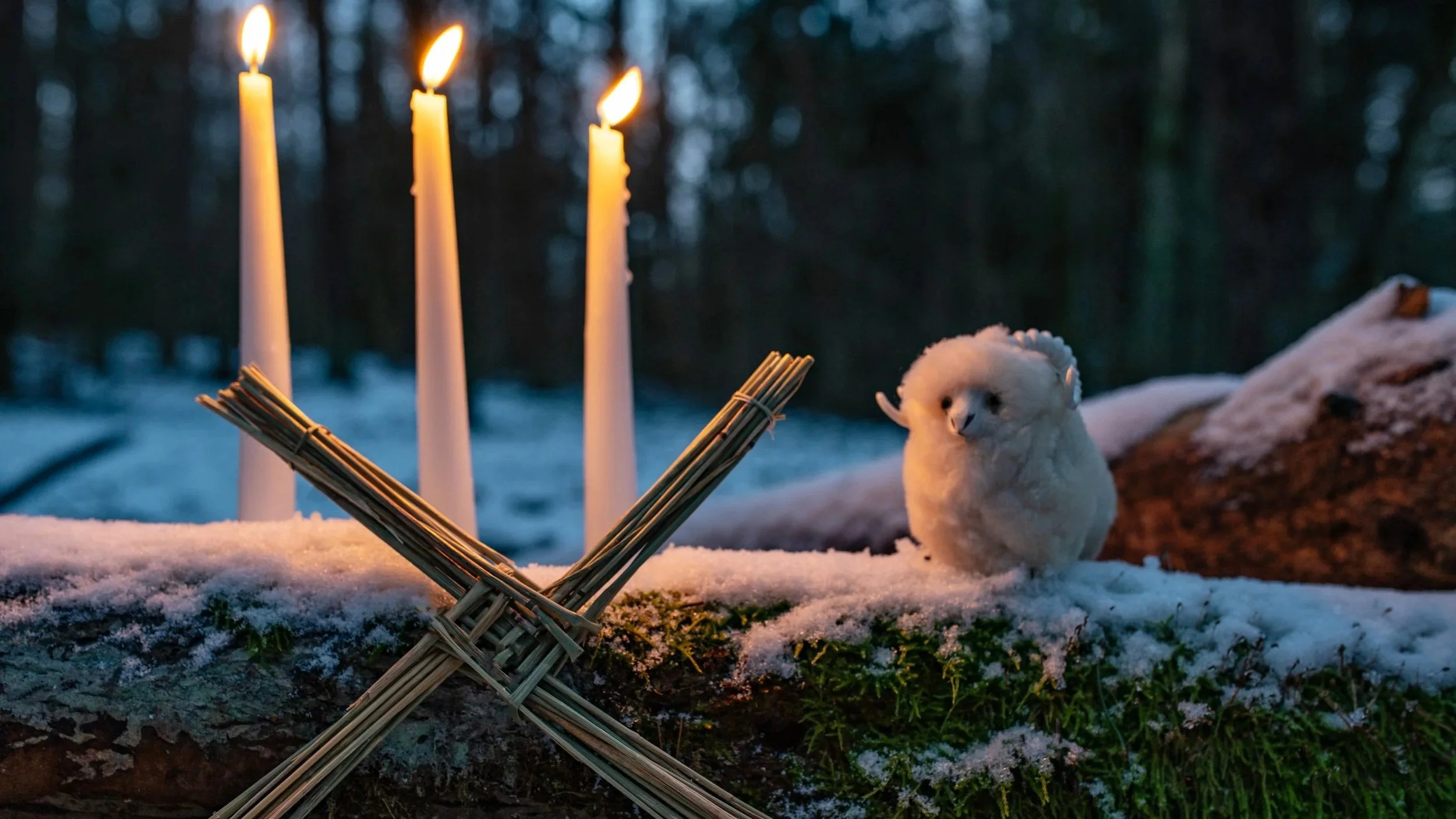
The ground is still cold, yet something has shifted. Light lingers a little longer at the edge of the day, and beneath the frozen surface of the Land, life begins to stir. This is Imbolc, and the meaning of Imbolc lives in this quiet tension between stillness and movement, between what appears dormant and what is already preparing to be born. Nothing announces itself yet, but the body feels the change before the mind names it.
Imbolc arrives at the midpoint between Winter Solstice and Spring Equinox, a threshold rather than a destination. Across old European cultures, this time was marked through acts of tending: a fire kept alive at the hearth, water poured for cleansing, tools repaired, thresholds swept. These gestures were meant to protect what was forming unseen. Creation, it was understood, begins in warmth and patience, not in force.
“Creation begins with warmth, not with effort.
”
Many of us were never taught how to recognize this kind of timing. We live inside systems that reward speed, clarity, and visible progress, even in the realm of spirit. The nervous system learns to stay braced, waiting for the next demand, and rest becomes something to earn rather than something to trust. When we lose our sense of season, we also lose confidence in the slower intelligence that governs growth. The body registers this loss as fatigue, agitation, and a persistent feeling of being out of step.
Imbolc offers a different orientation. It reminds us that becoming unfolds in relationship, not through pressure. What wants to be born through us needs the same care the Earth gives her seeds at this time of year: shelter, warmth, and time. When we align with that rhythm, creation begins to move again, not as something we manage, but as something we belong to
When the Wheel Found Me in a Small German Village
I didn’t set out to live by the Wheel of the Year. It found me quietly after I moved to Germany at nineteen. The older rhythms still lived close to the surface there, woven into ordinary life. Time was marked by weather and long-held customs rather than urgency or abstraction, and something in my body began to soften and recalibrate.
In those early years in Ostwestfalen, the Land itself became my teacher. The pace of the seasons worked its way into my internal clock, and time stopped feeling like something to manage and began to feel like something to belong to. Living inside those rhythms changed how I listened, rested, and how I sensed what was being asked of me.
When my sensitivity later intensified beyond what I knew how to hold, what tethered me back was rhythm. Tracking the moon and learning to recognize “right times” gave my nervous system something reliable to lean against. Over time, the Wheel of the Year became a lived conversation between body, time, and place.
What grew from those years continues to shape my work today, rooted in the body’s relationship with time and Land.
[About Ro]
Why the Meaning of Imbolc Matters Now
The meaning of Imbolc matters now because many people are exhausted in ways they cannot quite name. Even spiritual life has become crowded with expectation. There is pressure to decide, clarify, set intentions, and move forward with confidence. When everything insists on momentum, the body responds by bracing. Something tightens, and something else that is so essential goes quiet.
You may recognize the ache beneath control-based spirituality. It shows up as fatigue under spiritual productivity, the sense that even your inner life has become another place where you are supposed to perform. Practices meant to nourish begin to feel like obligations, and self-reflection turns into self-surveillance. The nervous system stays alert, scanning for the next thing to fix or optimize.
Writers such as Sharon Blackie have observed that European myth and seasonal tradition were about belonging to Place and learning the timing of descent, waiting, and return. When those rhythms are lost, exhaustion always follows.
Imbolc arrives as a seasonal corrective. It honors containment, patience, and protection. It reminds us that forcing emergence too early can damage what is still forming. At Imbolc, the work is not to know what comes next, but to tend what is already stirring, even if it remains unnamed.
Imbolc as a Living Threshold Between Winter and Spring
Imbolc marks a moment of quiet transition, when the long inward pull of winter begins to soften. The days are still cold, the ground still holds its frost, and the world does not rush to show signs of change. Yet beneath the surface, the quickening has already begun. The meaning of Imbolc is found here, in the subtle shift where life gathers itself before movement becomes visible.
In many old European traditions, Imbolc was understood as the time when seeds began to stir in the belly of the mother. This was a time of listening and protection. The Earth was still resting, but her rest had changed in quality. It was no longer the deep descent of midwinter. It was a dreaming rest, warm enough to allow possibility to take shape.
The Hearth Keepers: Brigid, Holda, and the Return of Warmth
Across old European lands, Imbolc was guarded by figures who tended the fragile passage between winter and spring. They were not goddesses and gods of conquest, but keepers of the hearth, protectors of what must be warmed slowly to survive. Through them, the season taught that creation depends less on force and more on steady attention.
In the Celtic world of the northern European isles, Brigid was honored as guardian of the hearth flame. Her fire lived in kitchens and by bedsides, in places where food was prepared and bodies were healed. At Imbolc, that fire was renewed to ensure that what was already forming would not be lost to cold or neglect.
Farther south, Holda or Holle was said to bathe at this turning, shedding her winter form and emerging renewed. She carried both aspects of the season: the depth of the Crone and the brightness of the Maiden. Her transformation carried winter forward rather than erasing it, reminding people that change grows out of what has already been lived.
“Warmth is what allows transformation without breaking what came before.
”
The gestures associated with these figures reflected that same restraint. The acts of sweeping thresholds, mopping floors, and bething ( using the smoke from smouldering herbs to clear and bless a space) cleared stagnation without destroying what remained. Through Brigid and Holda, Imbolc teaches that tending is a form of wisdom, staying close to what is vulnerable until it can move on its own.
Remembering Forward Through Practice
We cannot step back into the past. The world our ancestors lived in no longer exists. But does preserving traditions as if they were artifacts serve us? When we look to cultures older than ours, we learn that traditions were meant to be practiced and carried forward. So, when we engage our ancestral practices now, we are not reenacting history; we are repairing continuity.
In many European lineages, seasonal practices were ways of keeping relationship intact between people, Land, and the other-than-human beings who share the world with us. Weaving a Brigid’s Cross for protection, blessing candles for the year ahead, tending the hearth, sweeping thresholds—these were working magical acts. They shaped the field of a home, supported the nervous system, and participated in maintaining balance and reciprocity with the living world. Ethnobotanist Wolf-Dieter Storl has written about these kinds of plant-centered and hearth-based practices as living relationships with Land and season, rather than symbolic remnants of the past.
When ancestral traditions are interrupted through displacement or erasure, the loss is carried somatically. Returning to practice, even imperfectly, becomes an act of lineage repair. It signals to the ancestors and to the Land that something has been remembered. It tells the body that coherence is possible again.
Living Imbolc in the Body, Not Just the Calendar
Imbolc is a season that asks to be felt first in the body. Living Imbolc means noticing where warmth is returning and where protection is still needed, where movement wants to happen, and where things remain held tight. The calendar can tell you the date. Only your body can tell you how the season is moving through you.
At this time of year, the work is subtle. It invites attention rather than action, warmth offered without expectation. In the body, this can feel like slowing down enough to notice where bracing has replaced listening. When those places are met with care rather than correction, a softening of its own happens. Thinkers like David Abram have written about the body as the primary site of relationship with the living world, where perception itself is a form of participation.
This rhythm shaped Come Home to Your Body, a simple ritual of warmth and belonging that grew out of my Rewilding work. Living Imbolc in the body restores trust in timing as a felt experience, one that knows when movement is ready to arise.
Listening for the Turning
Imbolc invites a kind of attention that stays close enough to notice subtle shifts. Reflection becomes a way of listening through the body rather than thinking ahead.
Where in your life are you standing at a threshold, where one thing has ended, and another has not yet begun?
What sensations arise when you stay present in that in-between?
Which parts of you are asking for warmth and protection rather than effort?
What feels ready to be tended quietly, even if it cannot yet be named?
How does your body signal when timing is right?
These questions are companions for the season, returning again as the light slowly gathers.
Returning to the Hearth
The meaning of Imbolc is something we return to whenever life asks us to slow down enough to listen. Beneath the urgency of modern life, the same quiet rhythm is still moving. The Land knows how to warm what is fragile and shelter what is becoming.
If you’d like a simple way to stay in conversation with this season, Come Home to Your Body offers a gentle ritual of warmth and belonging. It is a small hearth practice, meant to be returned to again and again, especially when the world feels cold or demanding.
When you live this way, the calendar becomes the pulse of your own becoming, steady and alive beneath the surface, waiting for you to come home. If you want to follow how this early stirring moves through the Land itself, Birch offers a deeper lesson in how spring begins below the surface.
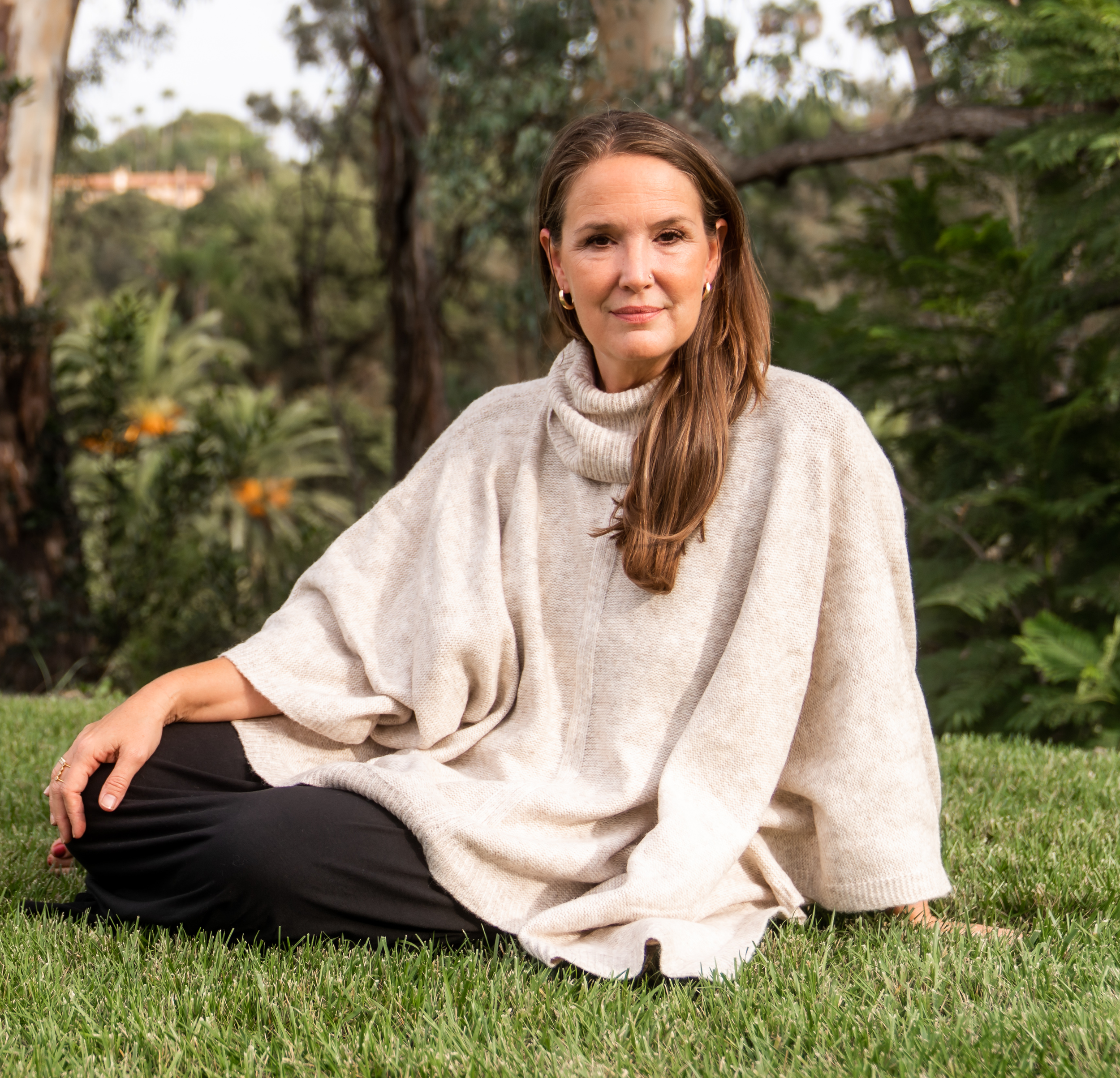
Ro Marlen is a wisdom teacher and somatic guide for sensitive, spiritually attuned Thresholders navigating burnout and relational wounding, often arriving in the body as chronic illness, in a culture that has forgotten how to belong.
Her work restores the Ground beneath healing: the remembrance that your body is Land, your lineage is living, and the world you are healing within is as sentient as you are.
She is the founder of The Sacred Evolutions Wisdom School. Through Rewild Yourself and the wider body of work at SEWS, she offers a living path back to what the Overculture worked hard to make you forget, and forward into what you are still becoming.
Her writing invites you to slow down, listen through the body, and remember the intelligence that has been living you all along